Beijing Temple of Heaven: An Interpretation of Its History, Rituals, Construction and Spatial System
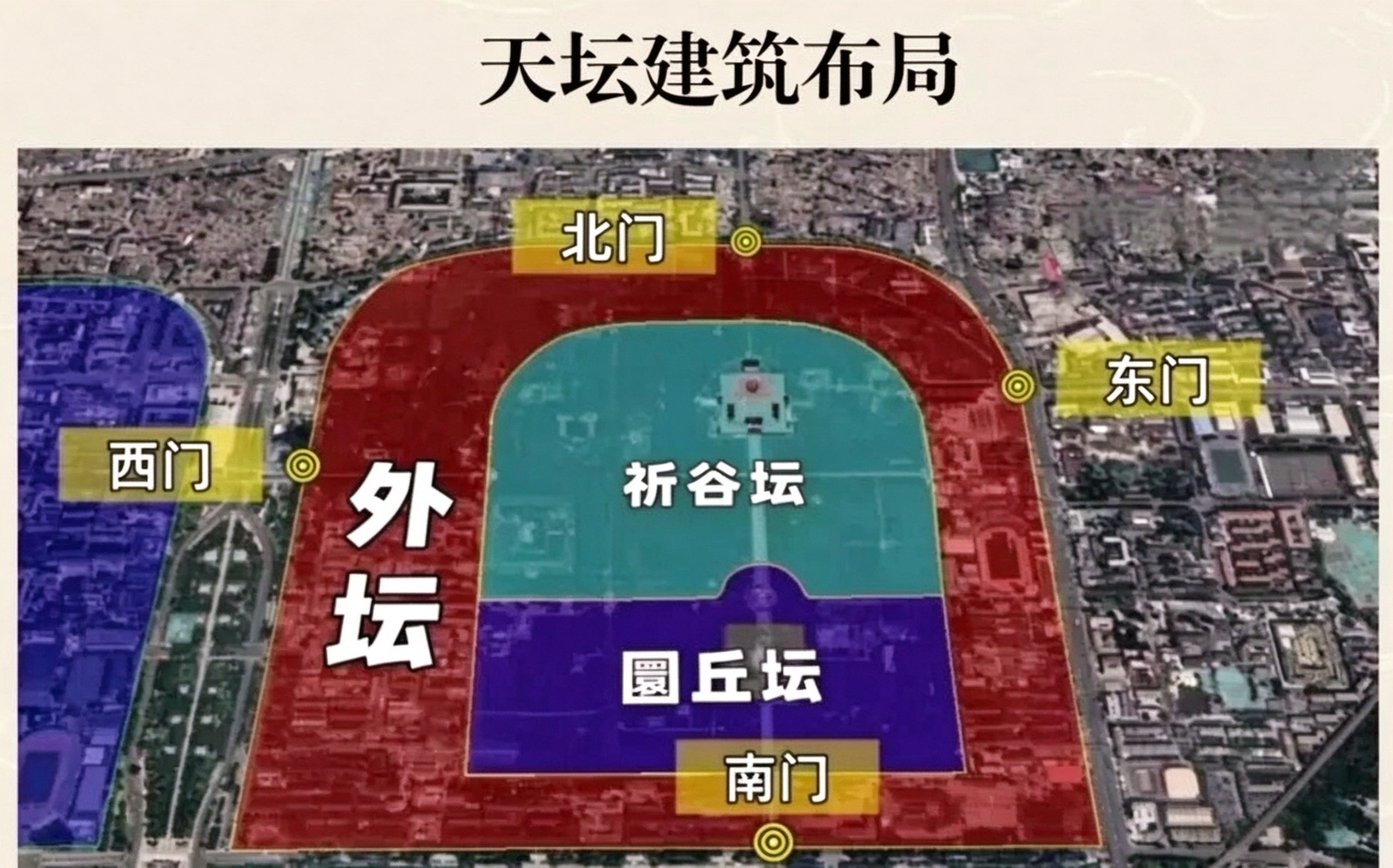
Beijing Temple of Heaven was a ritual complex built for the Ming and Qing imperial families to worship Heaven and pray for grain harvests. In the layout of Beijing during the Ming and Qing dynasties, it stood in the southern part of the outer city. Today, it lies east of Yongdingmen in Dongcheng District, Beijing.
It is far more than an ancient building group. It is a tangible representation of the ancient Chinese view of the universe. Within its walls, the ancients integrated their understanding of Heaven, imperial sacrificial rules, construction techniques, and mathematical philosophy.
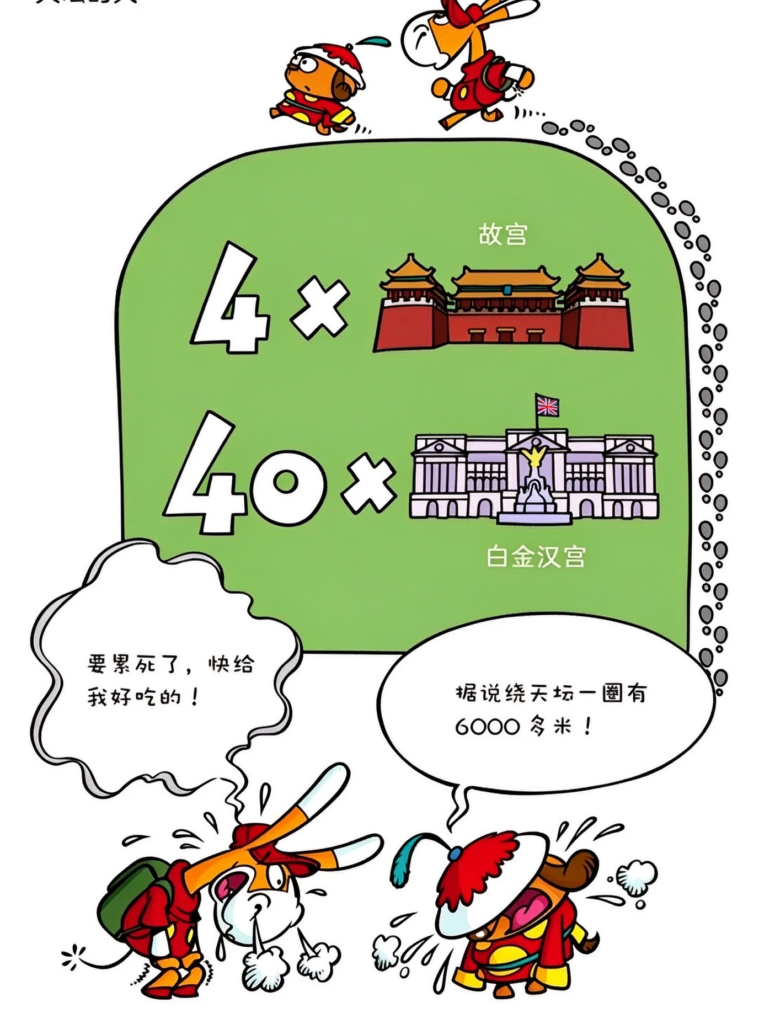
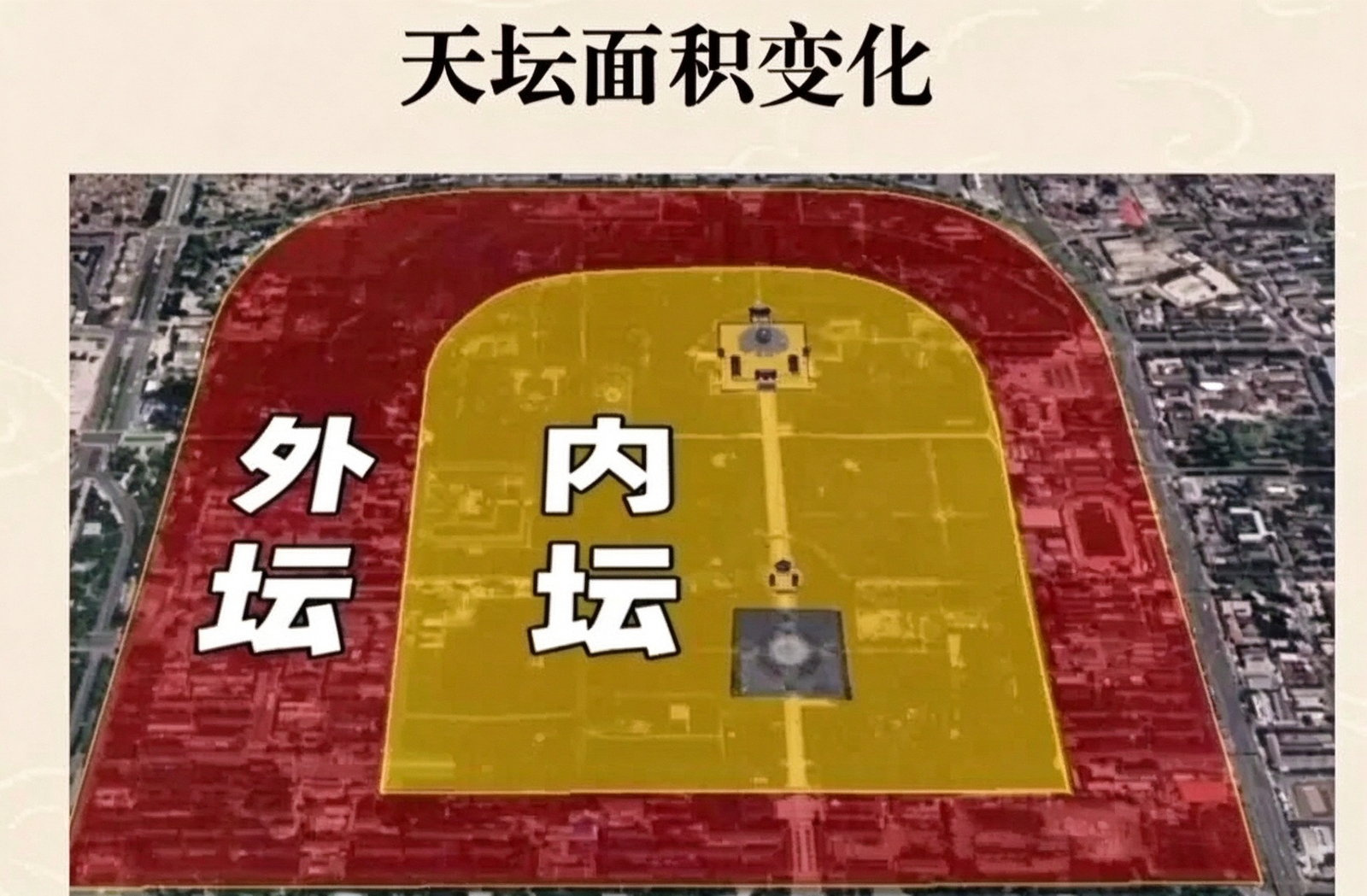
Beijing Temple of Heaven covers about 2.73 million square meters, making it an enormous site. Even if you cannot get tickets to the Palace Museum or the National Museum of China, you can still find peace away from the crowds here. The area open to visitors today is mostly the original inner altar.
This article explores Beijing Temple of Heaven from four perspectives: its urban location, sacrificial rituals, architectural construction, and spatial symbolism. It sorts out the full system of this site, including its construction background, ceremonial functions, structural rules and symbolic meanings.
1. The Temple of Heaven’s Location within Beijing and the Altar-Temple System
To understand The Temple of Heaven, you first need to grasp its special place in the ancient urban layout of Beijing.
A Site Southeast of the Central Axis
Beijing Temple of Heaven does not sit on Beijing’s main central axis. It lies slightly off the axis, toward the southeast.

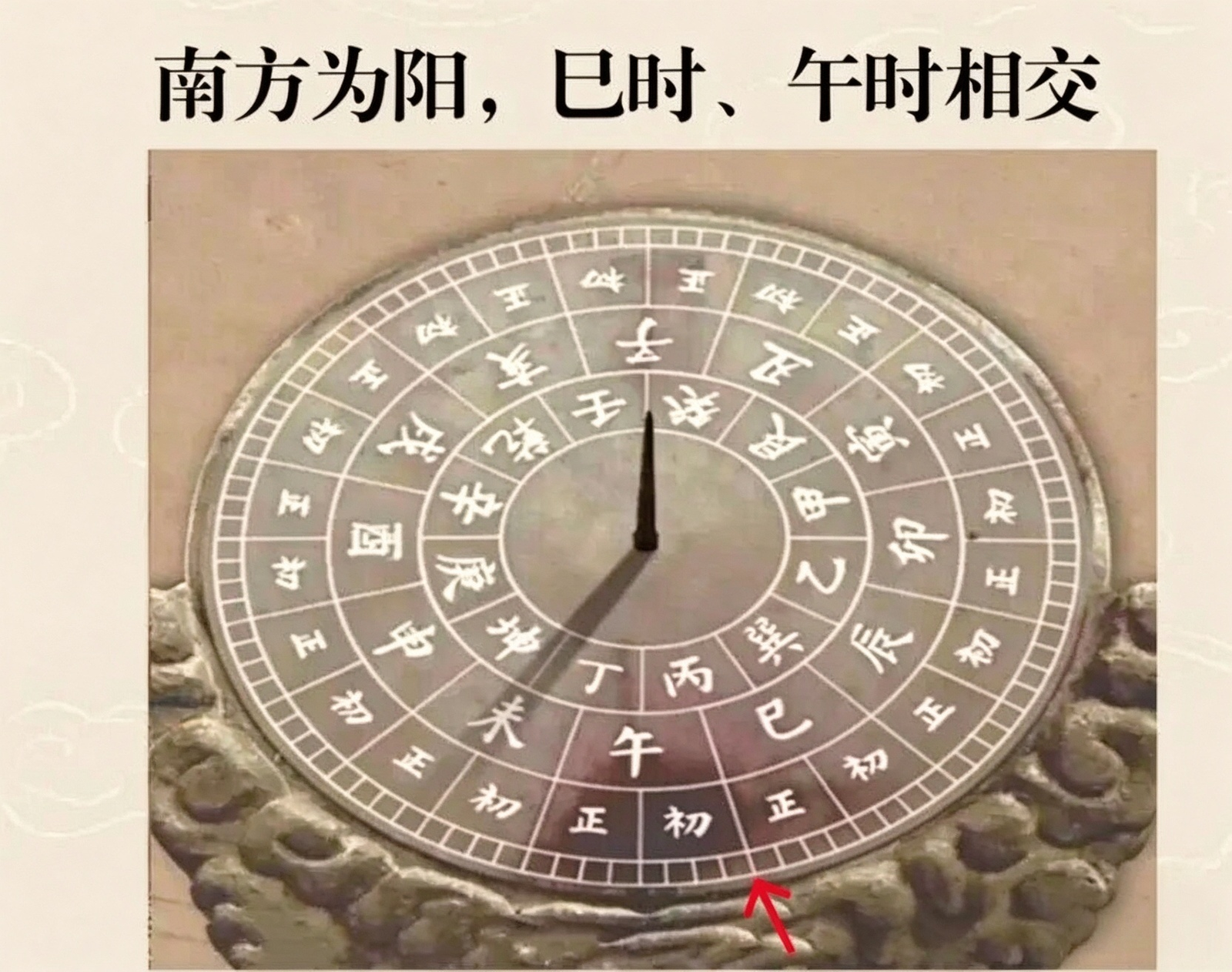
This site was chosen based on ancient cosmic beliefs. Under the Yin-Yang and Bagua framework, Zhengyangmen marks the starting point of China’s “0-kilometer line” and is seen as the center of the Bagua diagram. The Temple of Heaven sits roughly 30 degrees southeast from this central axis.
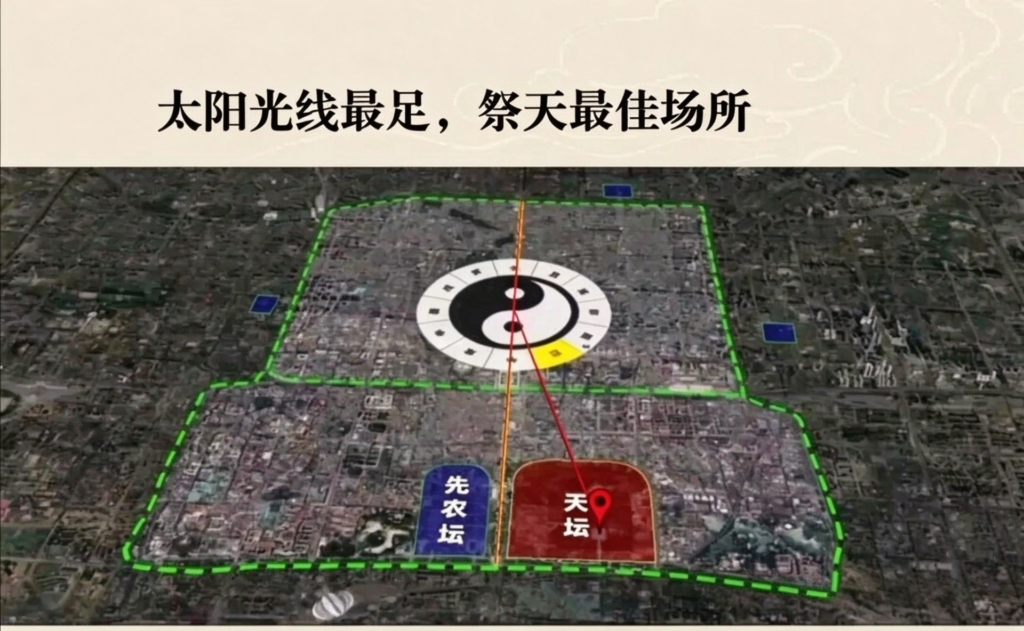
This spot falls at the transition between the Si and Wu hours, the time when yang energy reaches its peak.
This spatial concept dates back to the Dadu of the Yuan Dynasty. Back then, the city’s center was set at Wanning Bridge. Ancient planners used the width of Jishuitan Pond as a reference and mirrored it to form a symmetrical urban layout.
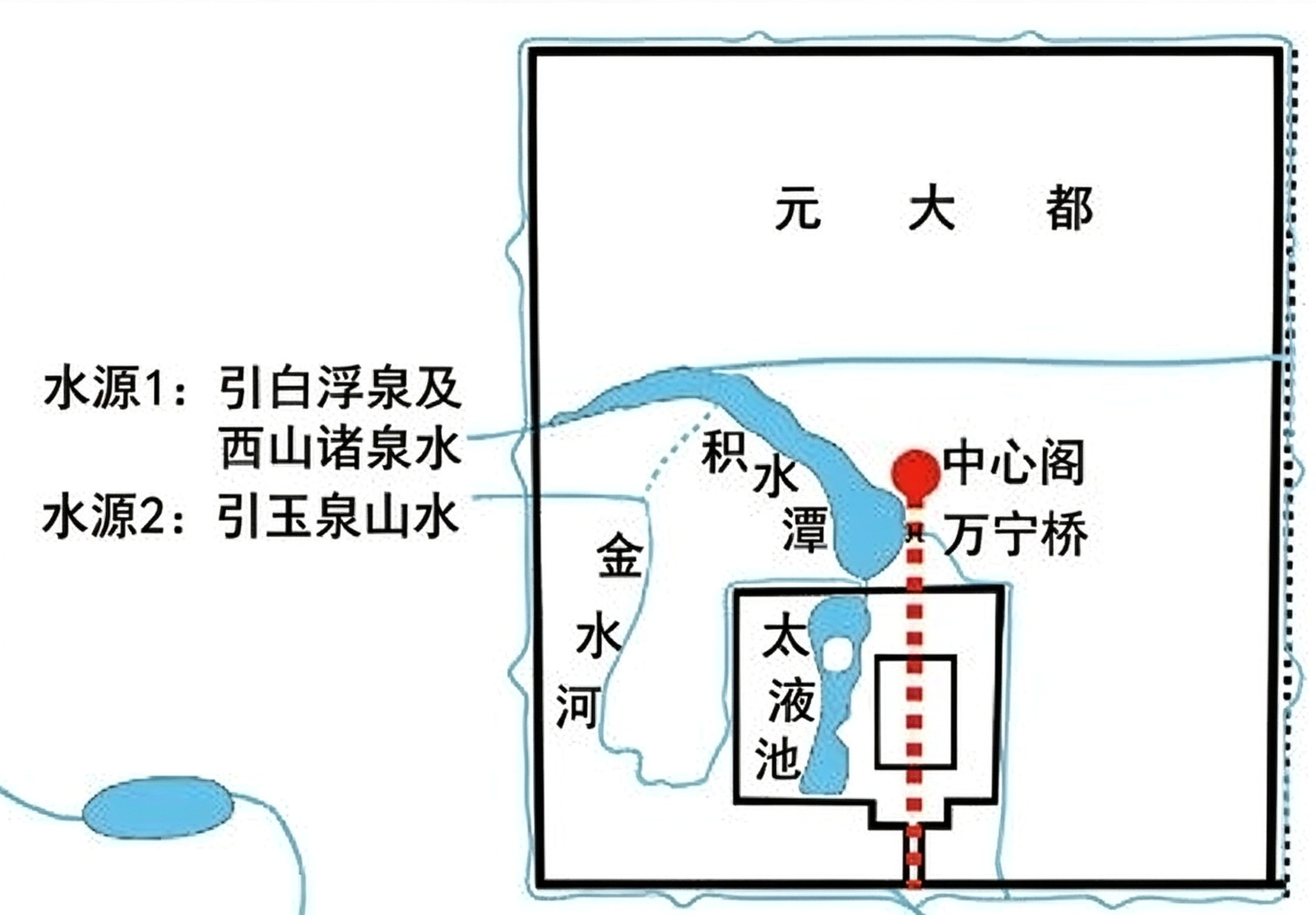
The location of the Temple of Heaven carries forward this old tradition: laying out cities according to astronomical principles.
Beijing Temple of Heaven in the “Nine Altars and Eight Temples” System
Beijing Temple of Heaven was not built in isolation. It formed a core part of Beijing’s ritual system known as the “Nine Altars and Eight Temples”.
The Nine Altars include: the Temple of Heaven (covering the Prayer for Grain Altar and Circular Mound Altar), the Earth Altar, the Sun Altar, the Moon Altar, the Altar of Land and Grain, the Agriculture Altar (Taisui Altar), and the Silkworm Altar. The Eight Temples include: the Imperial Ancestral Temple, the Confucius Temple, the Temple of Ancient Monarchs, the Fengxian Hall, the Chuanxin Hall, Yonghe Temple, the Shouhuang Hall, and the Tangzi Shrine.
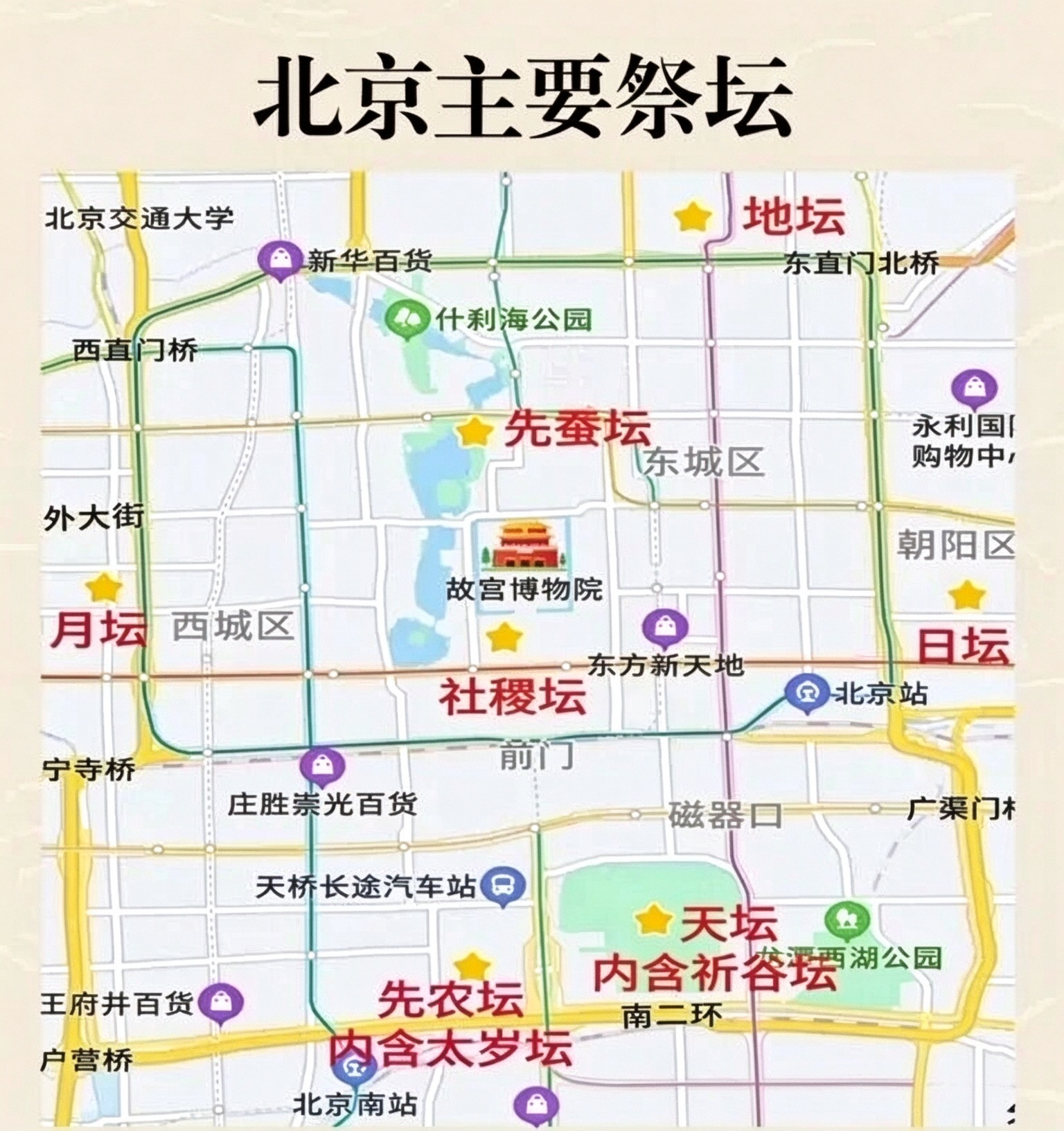
Each altar had a clear role and hosted rituals at fixed times of the year. At the Temple of Heaven (Circular Mound Altar), emperors worshipped Heaven on the Winter Solstice. At the Earth Altar, they worshipped Earth on the Summer Solstice. At the Sun Altar, they held rites on the Spring Equinox. At the Moon Altar, ceremonies took place on the Autumn Equinox. The Agriculture Altar and the Altar of Land and Grain hosted spring rituals. The empress led ceremonies at the Silkworm Altar in spring. Officials presided over rites at the Taisui Altar. The Winter Solstice worship at the Temple of Heaven ranked highest among all these rituals, as it was dedicated directly to Heaven.
Security Design for the Suburban Altar
During the Ming and Qing dynasties, the Temple of Heaven stood in the countryside outside the city walls. When the emperor came here for the Heaven worship ceremony, safety was a top priority. Two moats were built outside the altar for layered protection.
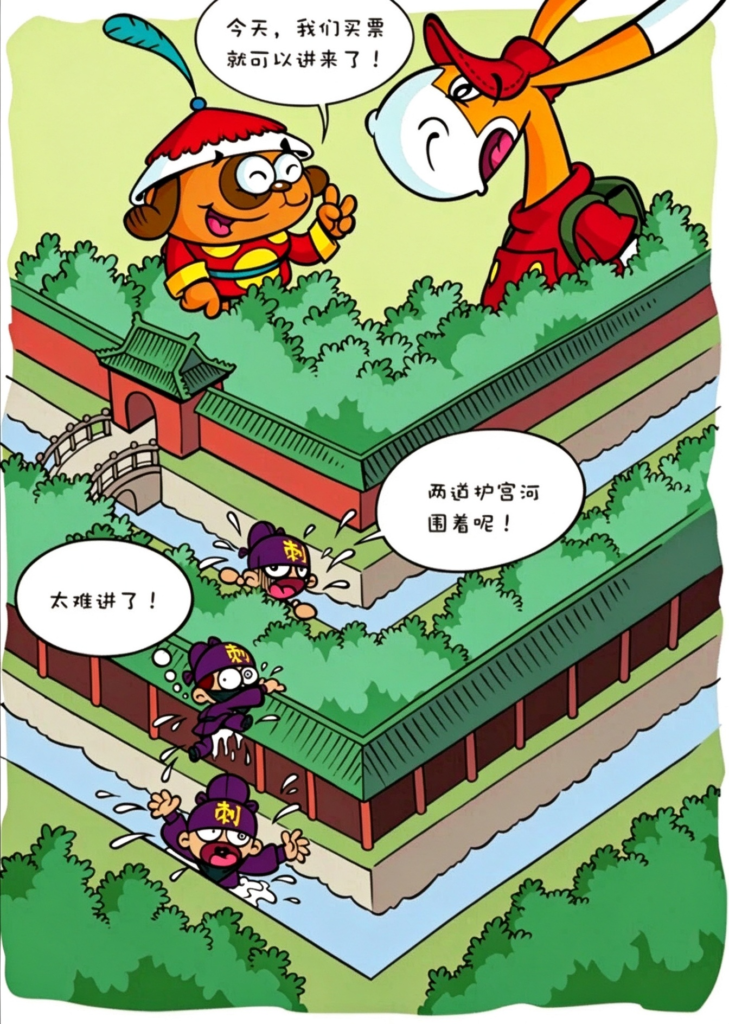
Beside the Fasting Palace inside the altar, you can still see two deep ditches, an inner one and an outer one. They served two purposes: security and ritual separation.
II. Overall Layout of Beijing Temple of Heaven : Dual Sacrificial Systems and the Philosophy of Heaven–Human Unity
With the site finalized, the inner area of the Temple of Heaven formed a complete sacrificial plan split between the north and the south.
Two Altar Zones: Circular Mound Altar and Prayer for Grain Altar
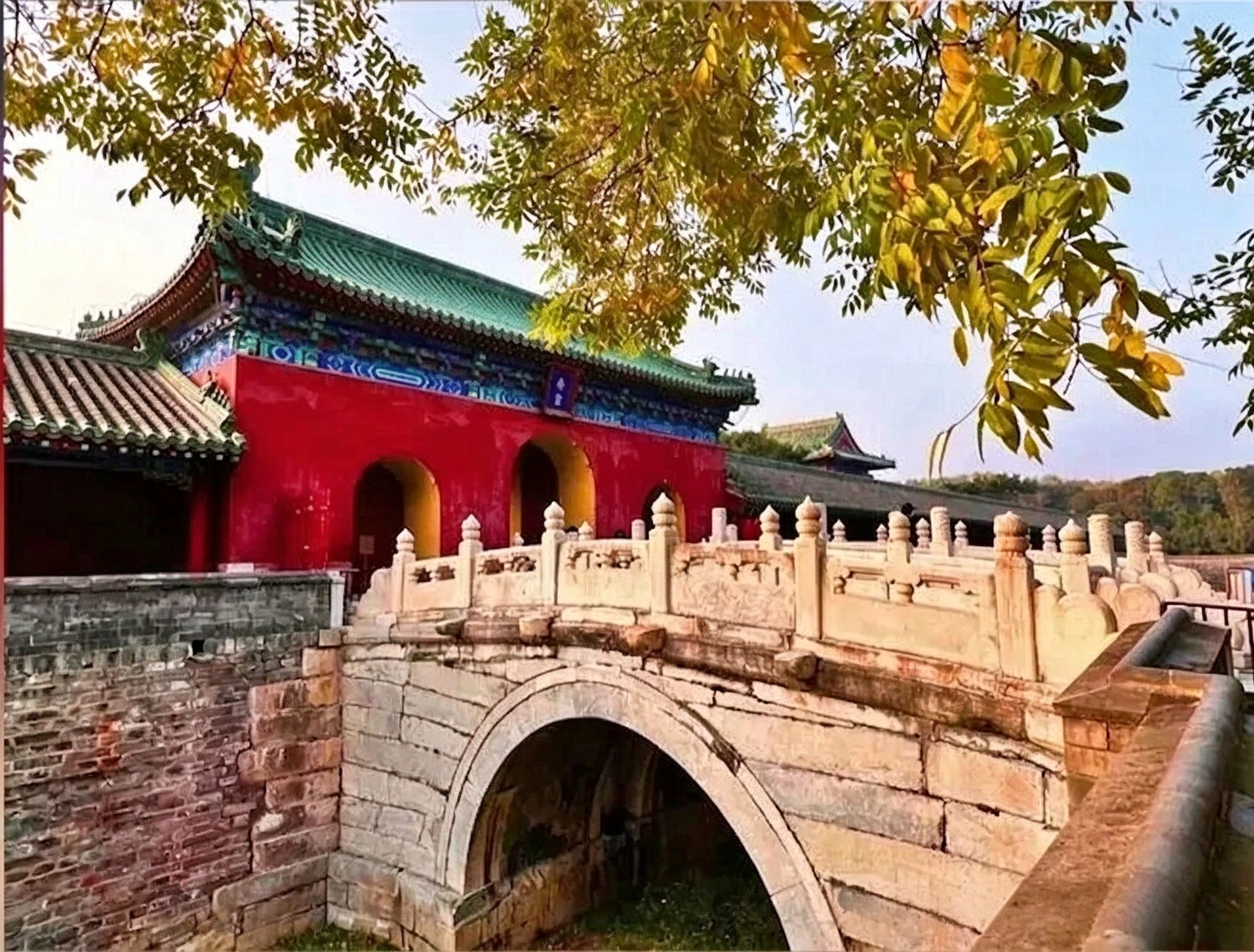
The Temple of Heaven houses two separate sacrificial systems. The southern zone centers on the Circular Mound Altar, reserved for worshipping Heaven. The northern zone is dominated by the Prayer for Grain Altar (Hall of Prayer for Good Harvests), built to pray for bumper grain harvests. A partition wall separates the two altars. The Chengzhen Gate, one of the four Heavenly Gates of the Circular Mound Altar, connects northward to the Danbi Bridge. It therefore also serves as the southern gate of the Prayer for Grain Altar.
The Chengzhen Gate follows a design similar to the Zhaoheng Gate, yet with a higher ceremonial rank. Its central arch reaches 7.2 meters high, while the side arches stand at 5.2 meters.
When the Circular Mound Altar was completed in the 9th year of the Jiajing reign of the Ming Dynasty (1530), four Heavenly Gates were erected on its four sides: Taiyuan Gate to the east, Zhaoheng Gate to the south, Guangli Gate to the west, and Chengzhen Gate to the north. These four gate names derive from the Qian hexagram judgment in The Book of Changes: Origin, Penetration, Benefit, Constancy (Yuan, Heng, Li, Zhen)Chinese Te…. They symbolize the endless cycle of the four seasons and the perpetual renewal of all life under heaven. Ancient people observed celestial movements through seasonal shifts. They then translated this belief into altar construction and sacrificial rituals, expressing the cosmology of harmony between heaven and humanity—living in accordance with natural rhythms and offering gratitude and prayers.
Supplementary Ritual Structures: the Beacon Lantern and the Chongyu Altar
A beacon lantern stands southwest of the Circular Mound Altar. It is a cylindrical bamboo lantern, 2.15 meters tall and 1.4 meters in diameter. Its supporting pole rises to nine ancient Chinese zhang (roughly 28.8 meters), fitted with a decorative ruyi rod and a pulley to hoist and lower the lantern. In addition, the Chongyu Altar once stood outside the Taiyuan Gate. This was where emperors passed through the Taiyuan Gate to hold rain-praying ceremonies before worshipping Heaven.
A Giant Blue Bi Jade Disc When Viewed from Above
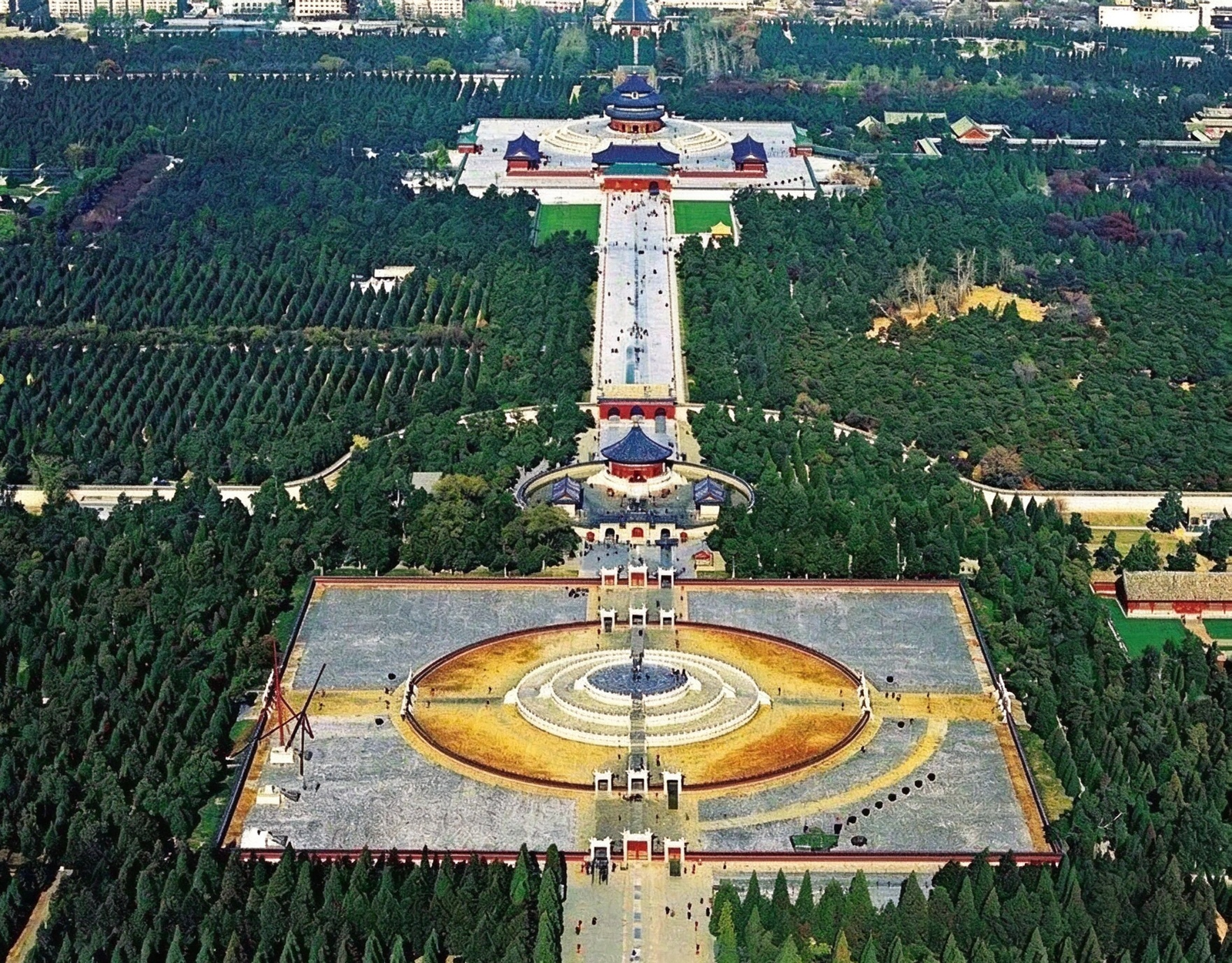
Seen from the air, the entire Temple of Heaven is blanketed in lush greenery, shaped just like a huge blue bi jade disc. A blue bi was a jade ritual vessel used specifically for worshipping Heaven in ancient times. The temple’s overall shape echoing this jade disc turns sacrificial rituals into tangible architectural form.
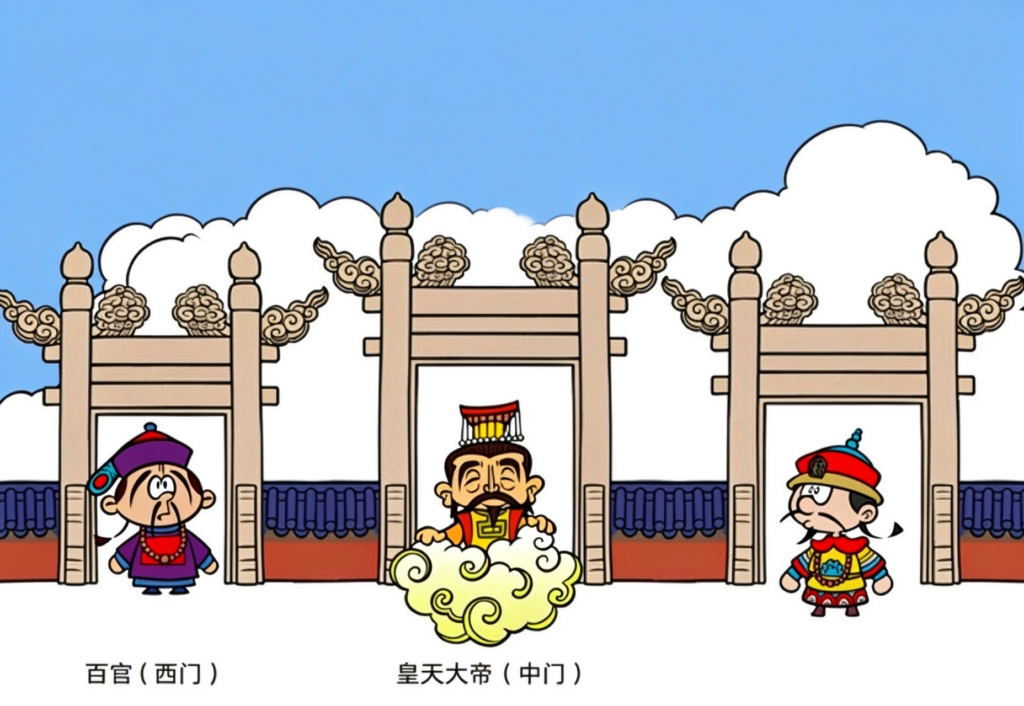
A Ritual Detail: Which Gate Did the Emperor Enter?
When the emperor arrived from the south to begin the Heaven worship ceremony at the Circular Mound Altar, the specific gate he took among the three gateways strictly followed ritual hierarchy.
III. Circular Mound Altar: The Core Altar for Winter Solstice Heaven Worship
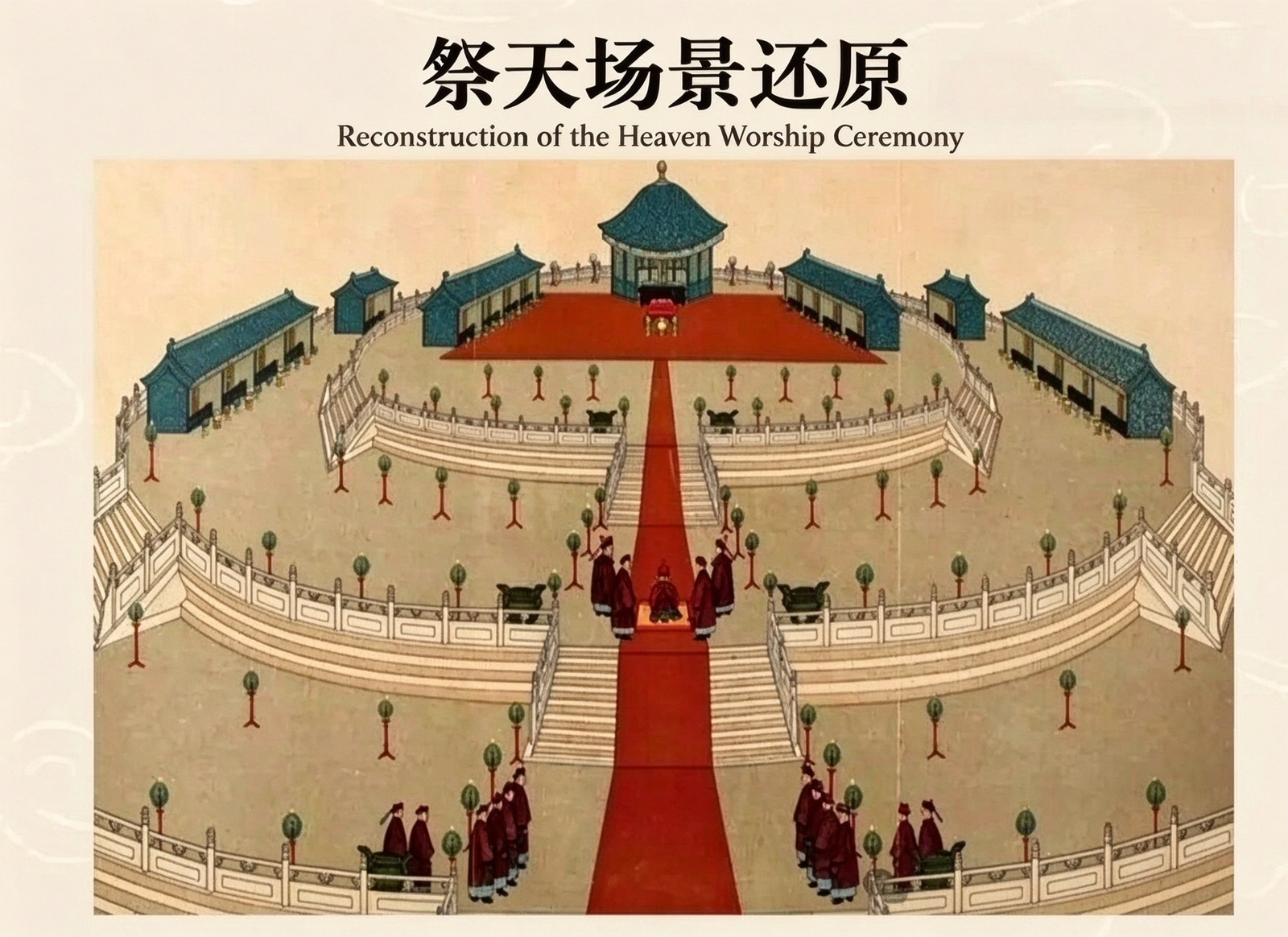
The Circular Mound Altar in the southern section is the primary site for emperors to worship the Supreme Deity of Heaven on the Winter Solstice. Its design concept can even be traced back to prehistoric cultures.
Evolution of the Circular Mound Altar
This altar was where Ming and Qing emperors offered sacrifices to Heaven. It sits slightly east outside Zhengyangmen. It was first built in the 18th year of the Yongle reign of the Ming Dynasty (1420). At that time, Heaven and Earth were worshipped together on this single altar. In the 9th year of the Jiajing reign (1530), separate rituals for Heaven and Earth were introduced. Following the ancient belief that “Heaven is round and Earth is square”, a square mound (later known as the Earth Altar) was built outside Andingmen for Earth worship. The Circular Mound was constructed here for Heaven rites. Four years later, the whole site officially took the name Temple of Heaven.
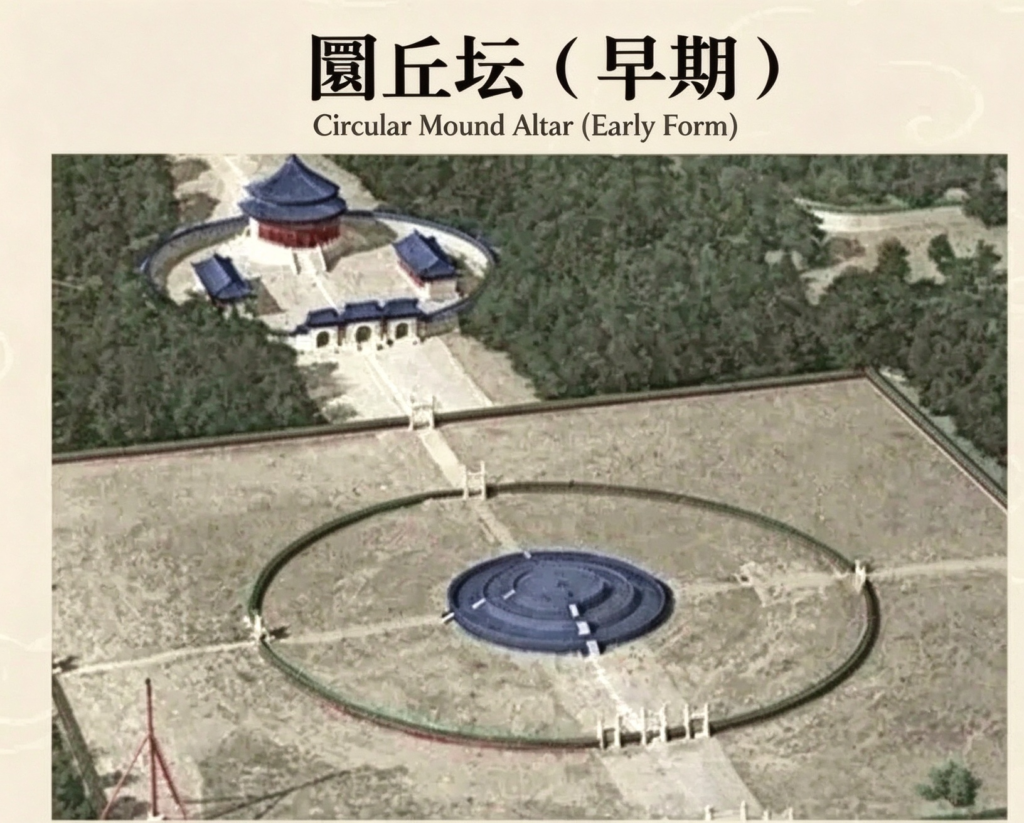
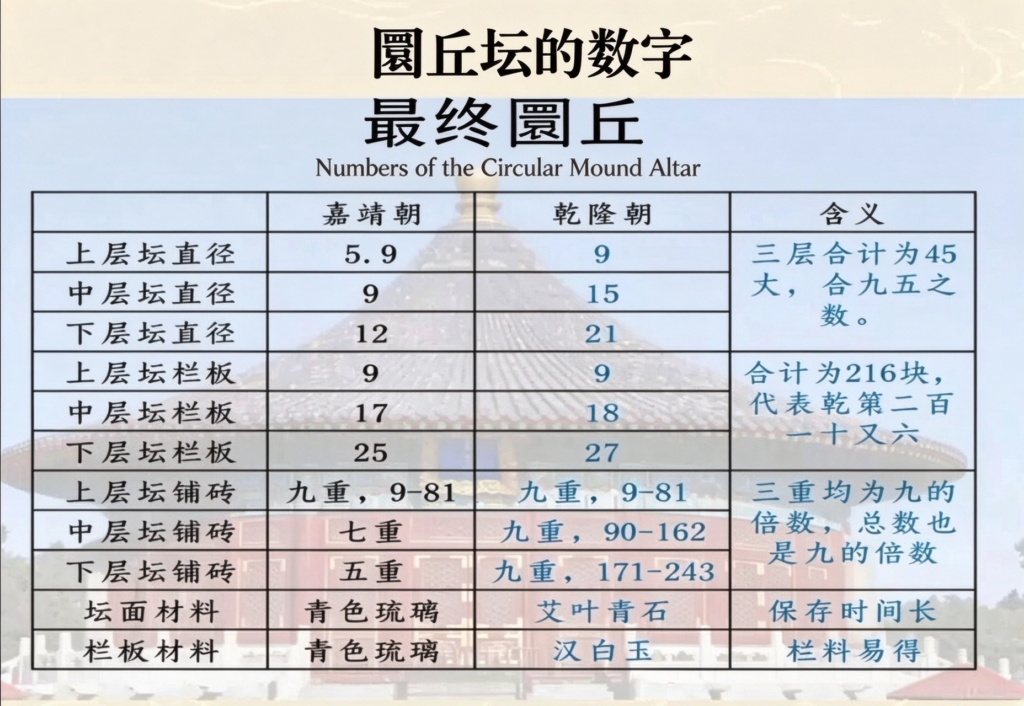
The altar built under Jiajing was relatively small. Its ground and railings were laid with blue glazed tiles, and its steps were made of white stone. This colour scheme evoked the image of blue sky with white clouds.
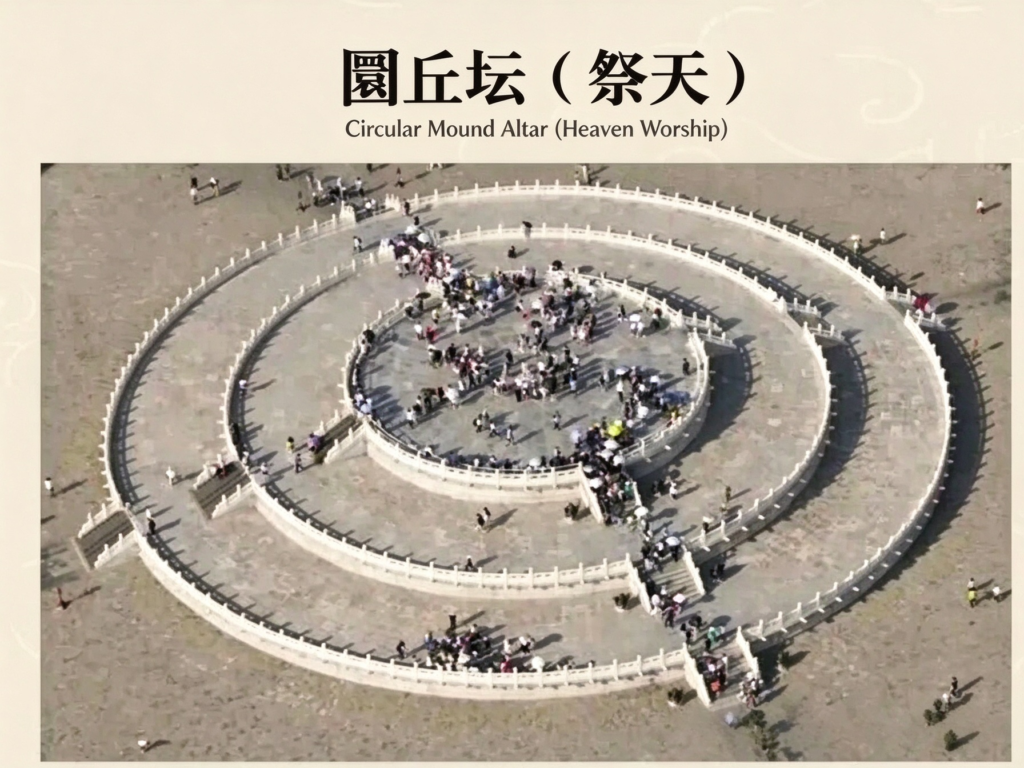
During the Jiajing period, only the spirit tablets of the Supreme Deity of Heaven, the Hongwu Emperor Zhu Yuanzhang and the Yongle Emperor Zhu Di were enshrined here. By the Qianlong reign, more ancestral spirit tablets needed to be placed. The original altar became too small to hold them all. Qianlong ordered the old structure demolished and rebuilt into a larger Circular Mound Altar.
Arrangement of Spirit Tablets During the Ritual
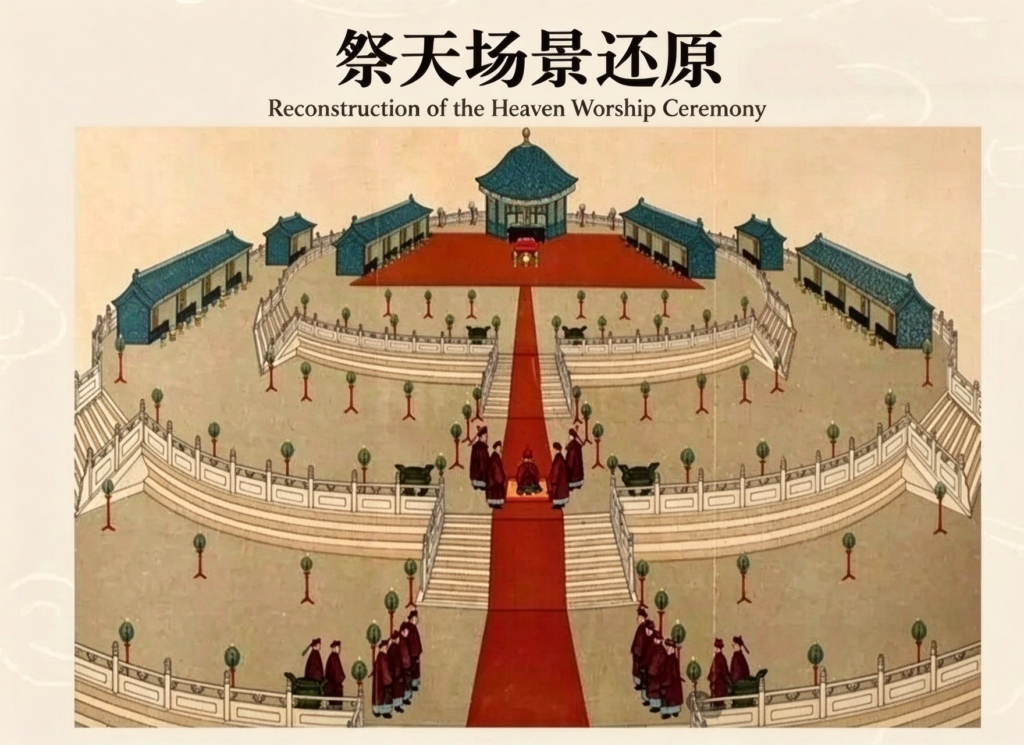
For the ceremony, the tablet of the Supreme Deity of Heaven was placed inside the central tent. Side tents held the spirit tablets of imperial ancestors. As the line of emperors grew longer over generations, the Qing court later limited the ancestral tablets to eight successive emperors, down to the Daoguang Emperor. Tablets for nature deities were arranged on the second tier.
Fire Offering to Welcome the Divine and the Wangliao Rite
The Heaven worship ceremony opened with the ritual of burning firewood to welcome the heavenly deity. The fire offering furnace is a large circular brick furnace lined with green glazed tiles.
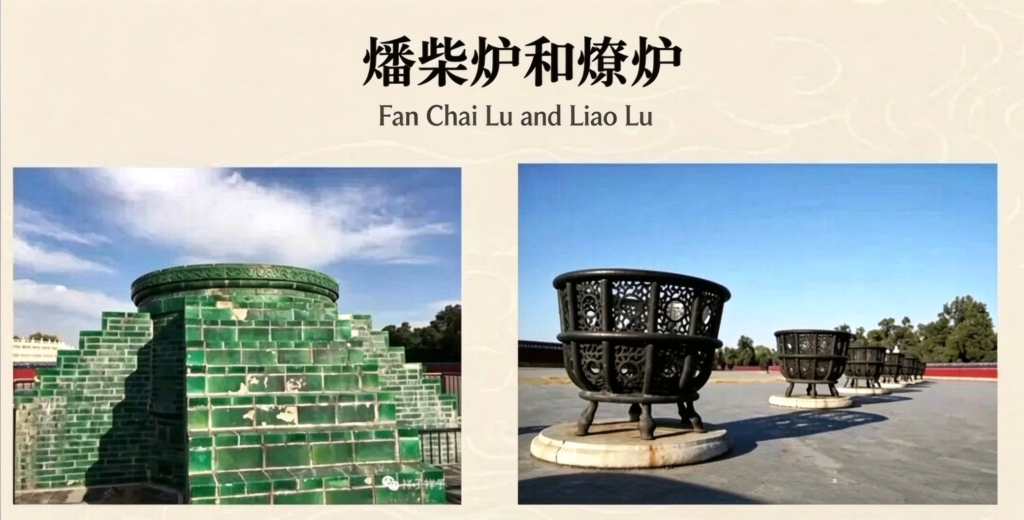
At the Prayer for Grain ceremony, a whole cleaned calf was placed on the furnace. Pine branches and reeds were lit to produce smoke, welcoming the god of Heaven. Remaining ashes and remains were buried in an earth pit as an offering to Earth.
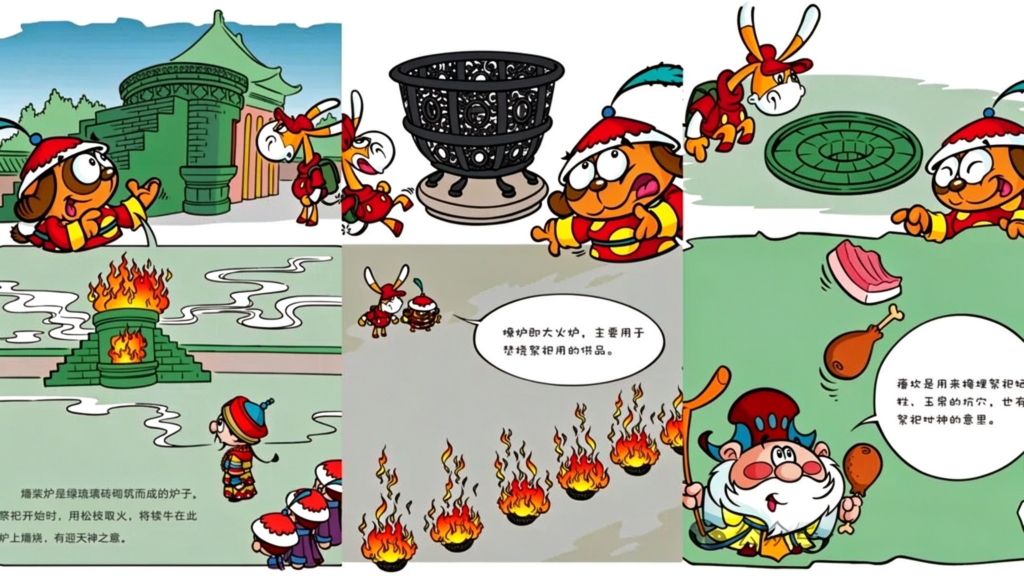
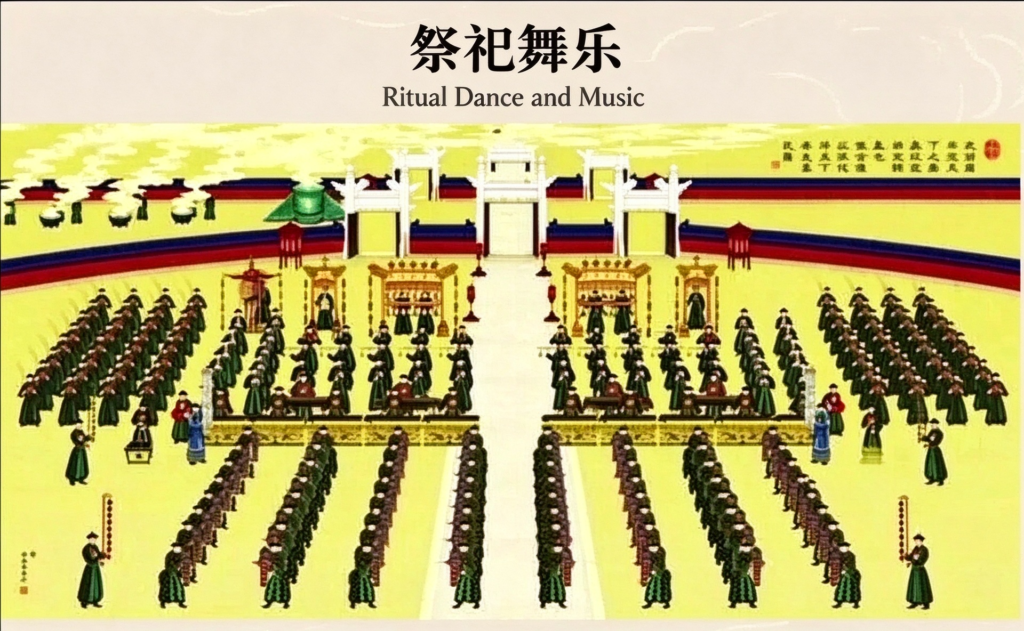
Once the ceremony concluded, offerings, prayer tablets and silk slips laid before the Supreme Deity of Heaven were respectfully carried to the burning furnaces to be incinerated. The emperor stood nearby to watch this process, a ritual known as Wangliao (Watching the Burning). There were eight burning furnaces in total, matching the eight ancestral spirit tablets. Throughout the whole service, Zhonghe Shaoyue court music played continuously, accompanied by the eight-row ritual dance, Bayi Dance.
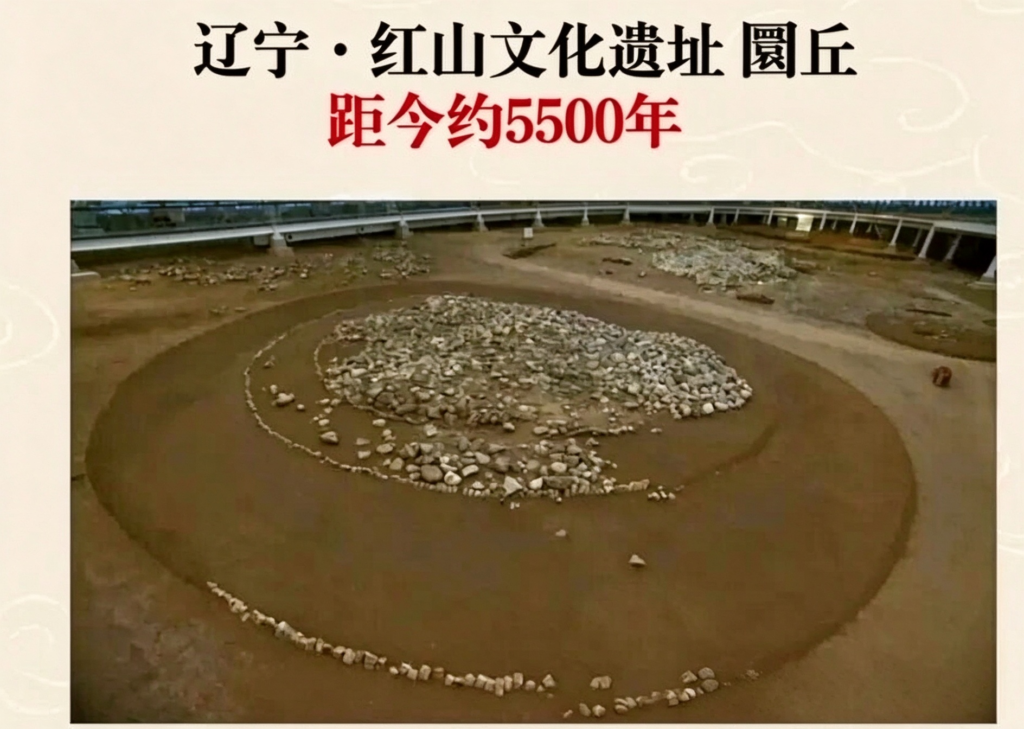
Ancient Roots of the Three Tiered Circular Platform: From Niuheliang to Beijing
The Circular Mound Altar at the Temple of Heaven is the latest surviving structure of this type. The earliest known circular altar dates back roughly 5,500 years, found at the Hongshan Culture site of Niuheliang.
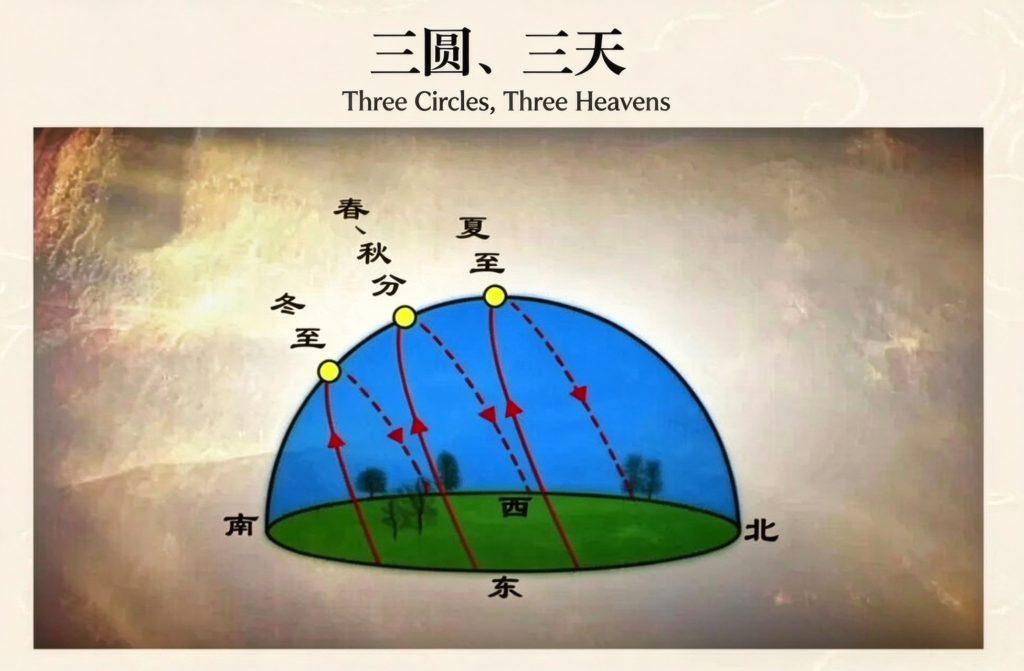
Why a circular mound? And why three tiers? Ancient people observed that the sunrise and sunset paths at the Winter Solstice, Summer Solstice, Spring Equinox and Autumn Equinox formed three overlapping circles. These were called the “Three Circles” or “Three Heavens”. This is the reason three stacked tiers were adopted for the Heaven altar.
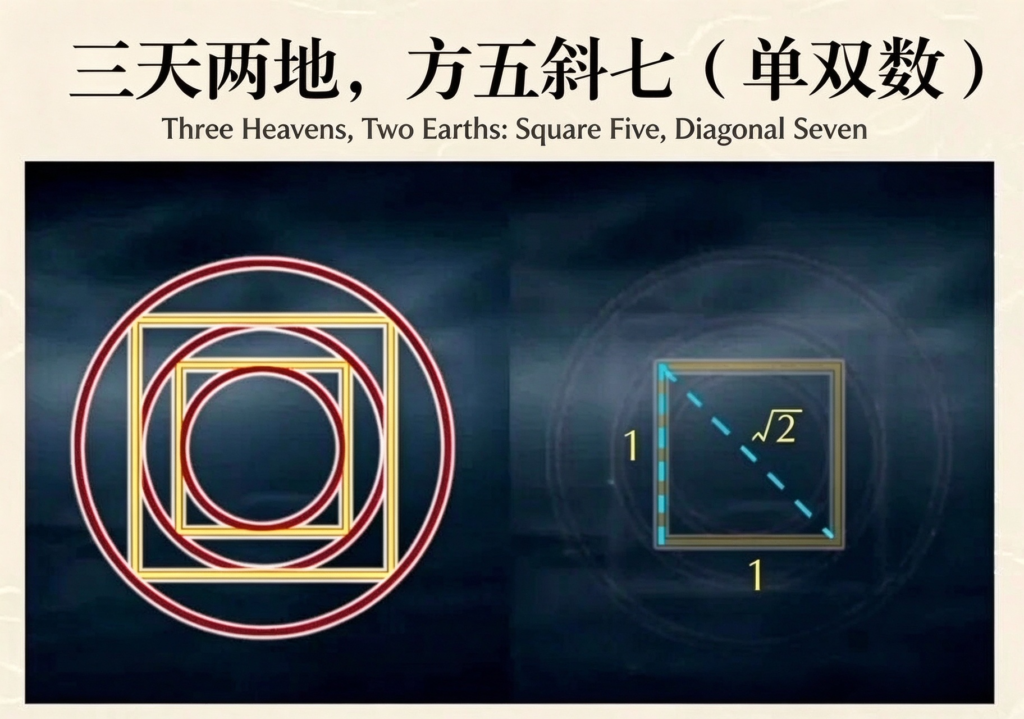
Inside these three circles sit two nested squares. If the side length of a square equals 1, its diagonal — the diameter of the matching circle — equals √2. Though the ancients did not understand the mathematical value of √2, this proportion gave rise to the construction rule: “Square five, diagonal seven”.
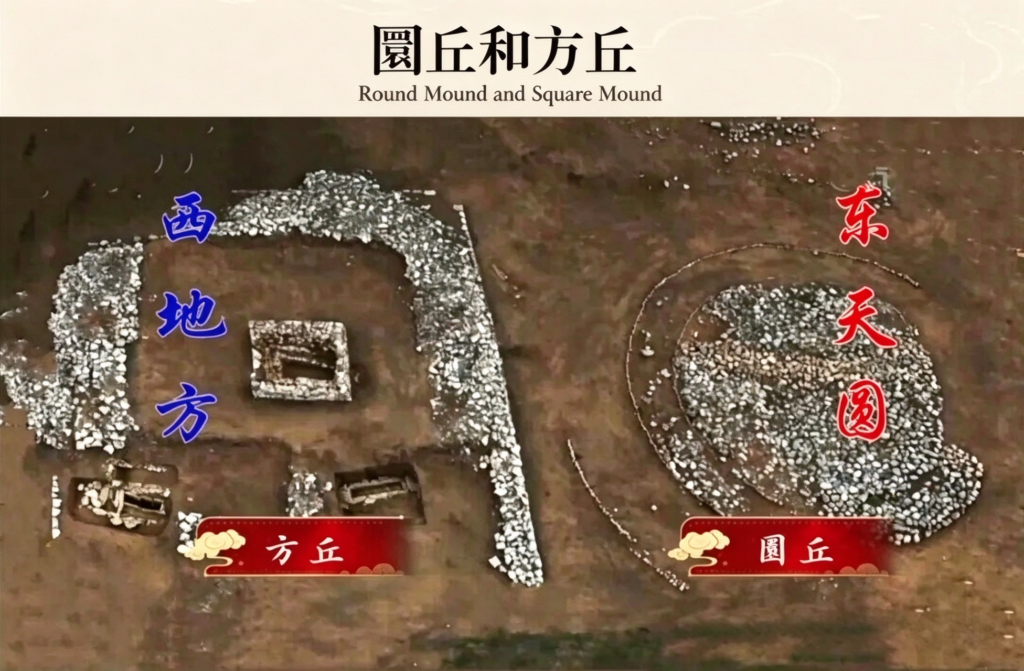
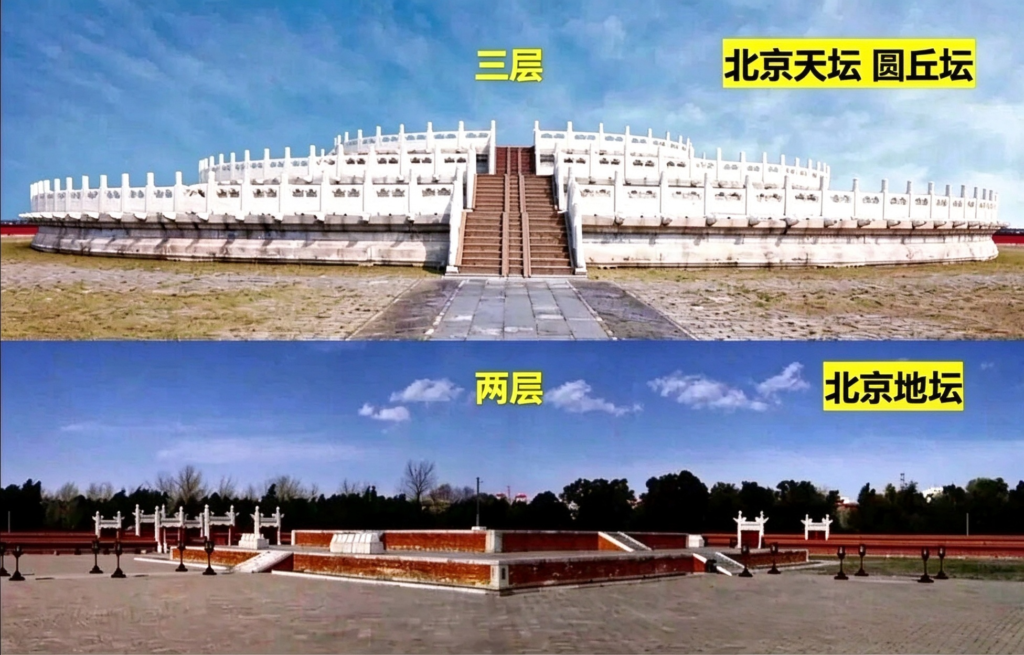
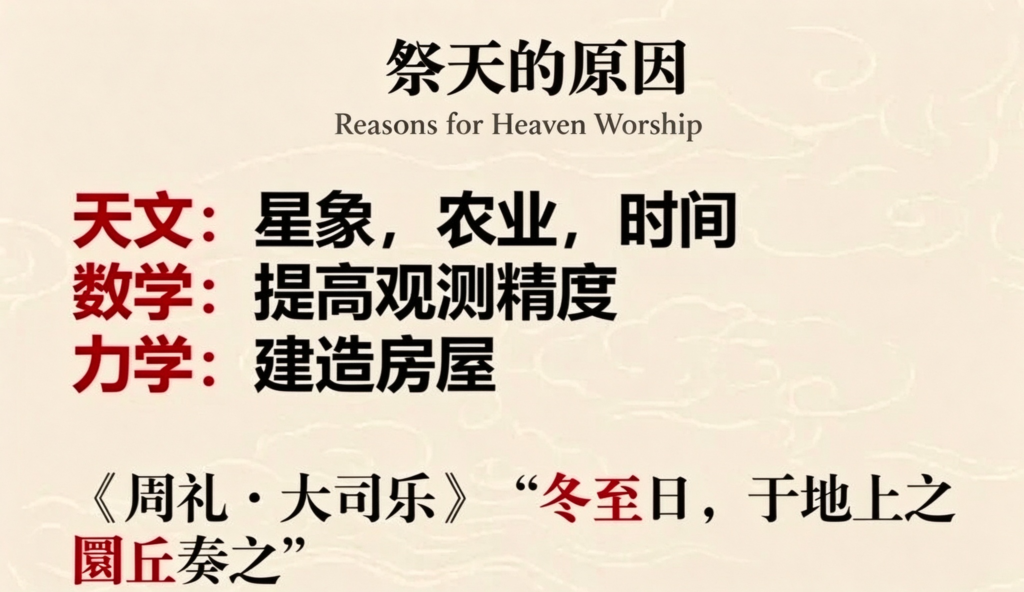
The origin of Heaven worship lay in ancient agricultural society’s reliance on astronomy and calendars. Celestial observations directly guided farming work. The Heaven sacrifice was a ceremony for humans to show reverence to Heaven and pray for timely rainfall and good harvests.
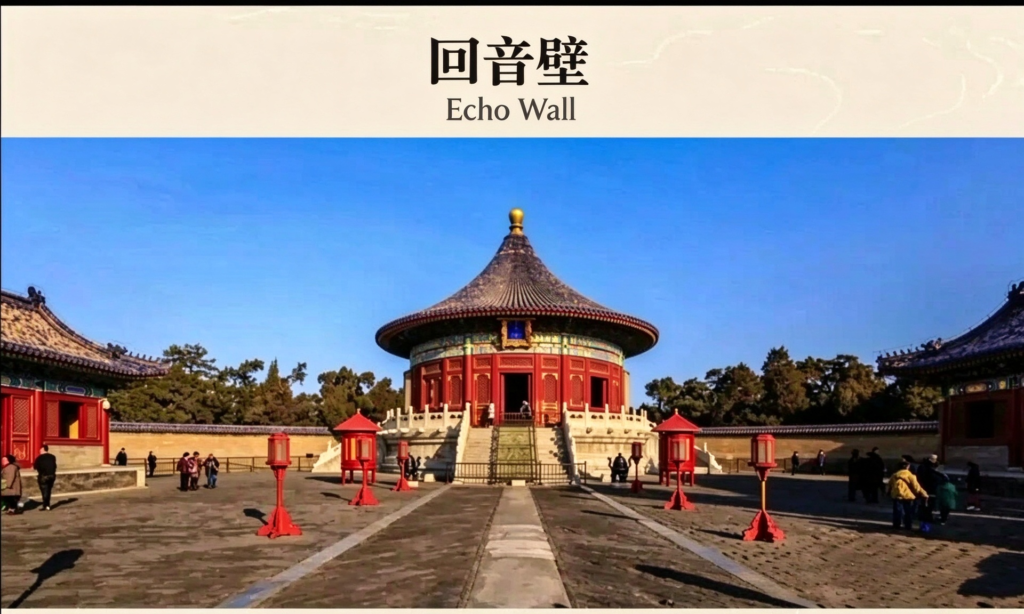
IV. Imperial Vault of Heaven: The Acoustic Complex Known as the Echo Wall
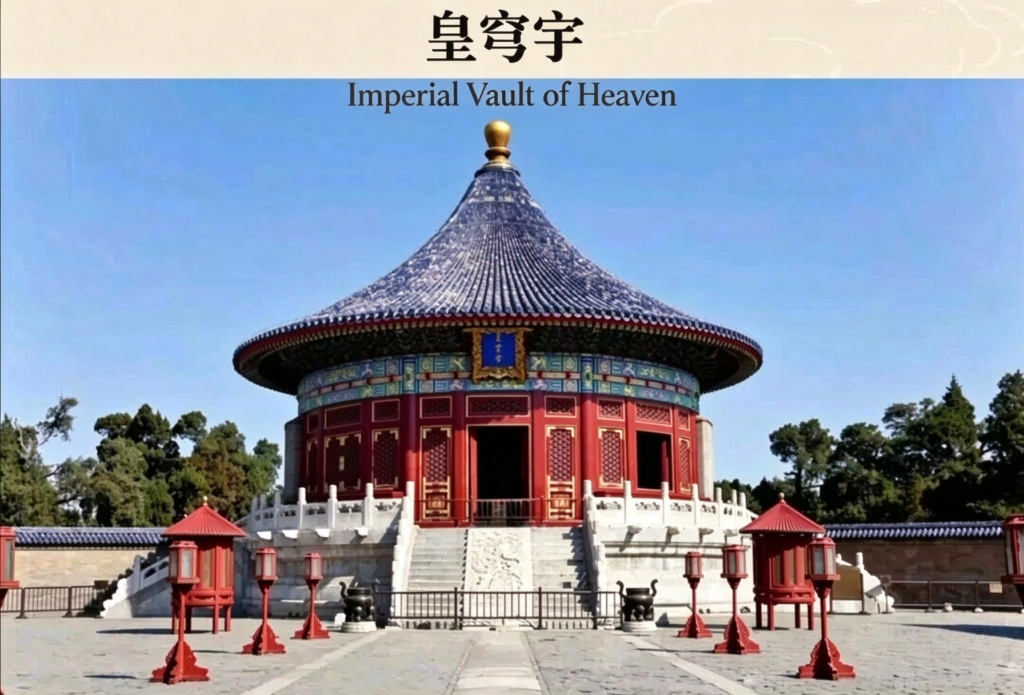
Just north of the Circular Mound Altar lies the widely known Echo Wall. Its official name is the Imperial Vault of Heaven. The popular nickname “Echo Wall” has become so famous that many people overlook its formal title.
The Main Hall of the Imperial Vault of Heaven and Its Remarkable Light Effect
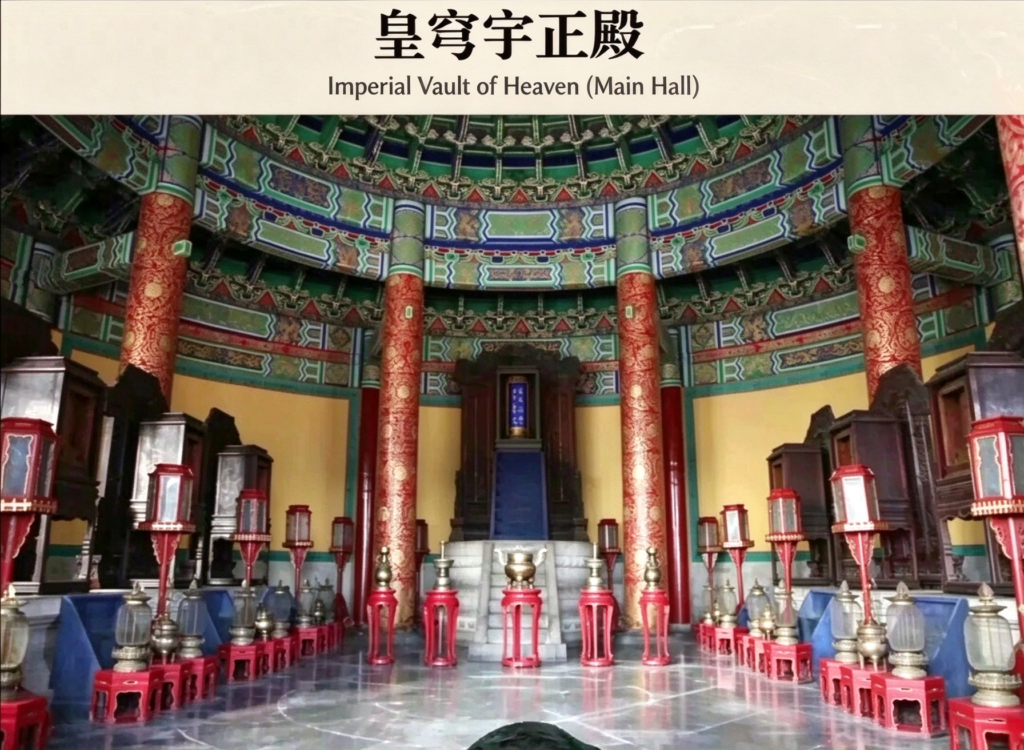
The main hall sits at the center of the Imperial Vault of Heaven courtyard. It houses ancestral spirit tablets and was expanded during the Qianlong reign.
At the center of the hall stands the tablet of the Supreme Deity of Heaven. Four tablets are arranged on each side, for a total of eight imperial ancestors.
This space holds a striking light phenomenon. If the gates are open on the Winter Solstice, time lapse photography can capture sunlight falling directly onto the tablet of the Supreme Deity of Heaven.
A comparable light effect appears in the Palace of Heavenly Purity at the Palace Museum, where light bounces off five golden dragons and lands on the “Upright and Bright” plaque. The Seventeen Arch Bridge at the Summer Palace features its own famous golden light piercing the archway at sunset.
The Echo Wall: Wall Construction and Fading Sound Transmission Effect
The original Echo Wall built in the Ming Dynasty was an earthen wall. It was demolished and rebuilt in the Qianlong period. The reconstructed surface uses fine, hard lime bricks from Linqing in Shandong Province, laid with the precision technique called “polished bricks with tight joints”.
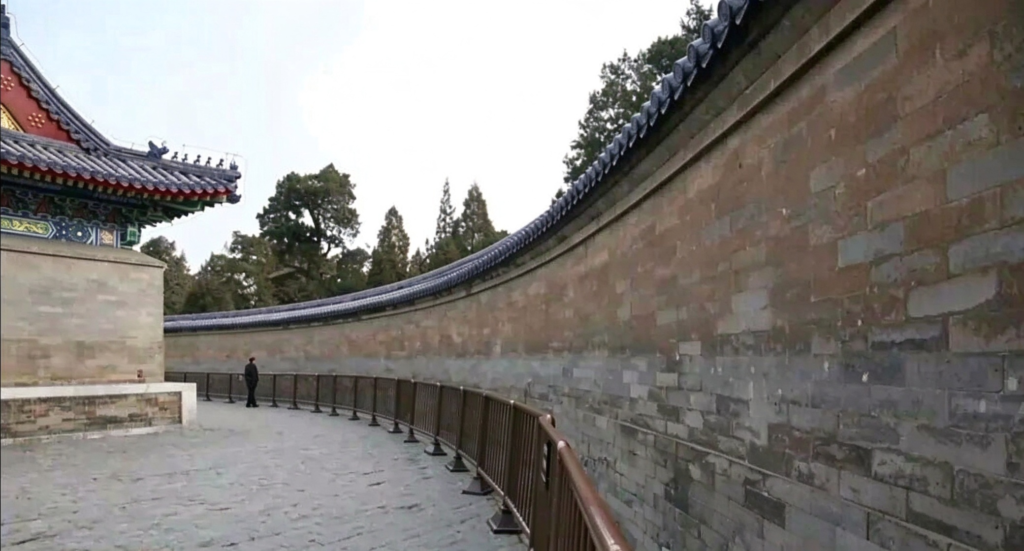
When two people stand against the wall behind the east and west side halls respectively, and one speaks northward close to the surface, sound waves travel along the curved wall. The voice can be heard clearly about 50 meters away on the opposite side, even at a normal speaking volume.
This acoustic effect only works under specific conditions: few visitors and speakers standing right against the wall. Today, scratches and graffiti left by tourists have ruined the wall’s original smooth finish. Guardrails have also been installed. As a result, the famous sound-carrying effect is far weaker than it once was.
Three-Echo Stone
The third slab of stone in front of the Imperial Vault of Heaven is known as the Three Echo Stone.
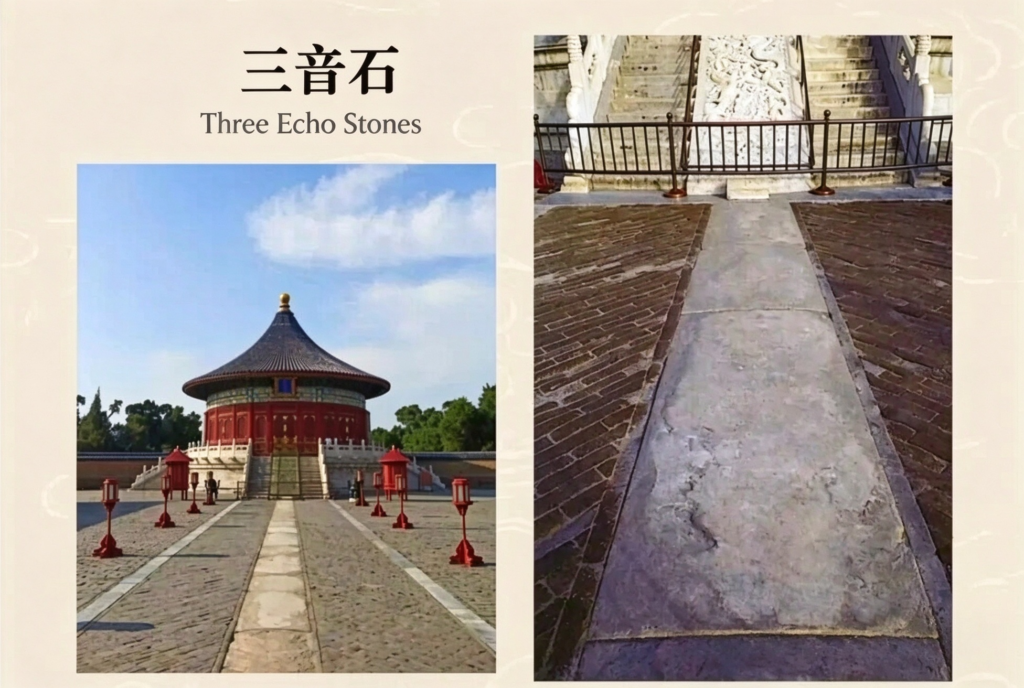
If you clap once while standing on this slab, you will hear three echoes. The stone sits almost exactly at the center of the circular Echo Wall. Sound waves reflect off the east side hall, the west side hall and the curved wall, then return toward the center. The large difference in travel distance for these reflected waves creates three separate audible echoes.
Dialogue Stone
The passageway in front of the Imperial Vault of Heaven is paved with 18 stone slabs of varying sizes. The southernmost slab, the 18th one, is the celebrated Dialogue Stone. Standing on this slab, you can distinctly hear someone speaking from the far northeast corner behind the east side hall, or the far northwest corner behind the west side hall. The straight line distance between the Dialogue Stone and the speaker is 36 meters, while the sound’s reflected path stretches roughly 50 meters. Even so, the sound pressure level matches what you would hear about 7 meters away in an open, unobstructed space. In practical terms: speech from 36 meters away on the Dialogue Stone sounds as loud as someone talking 7 meters away under ordinary conditions. This measured acoustic data adds another layer of wonder to this ancient architectural masterpiece.
V. Hall of Prayer for Good Harvests: The Symbolic Heart of the Prayer for Grain Altar
Heading north along the Danbi Bridge, you reach the core of the Prayer for Grain Altar in the northern section of the Temple of Heaven — the Hall of Prayer for Good Harvests.
Architectural Evolution: From the Grand Sacrifice Hall to the Hall of Prayer for Good Harvests
The Danbi Bridge links the Hall of Prayer for Good Harvests with the Circular Mound Altar.
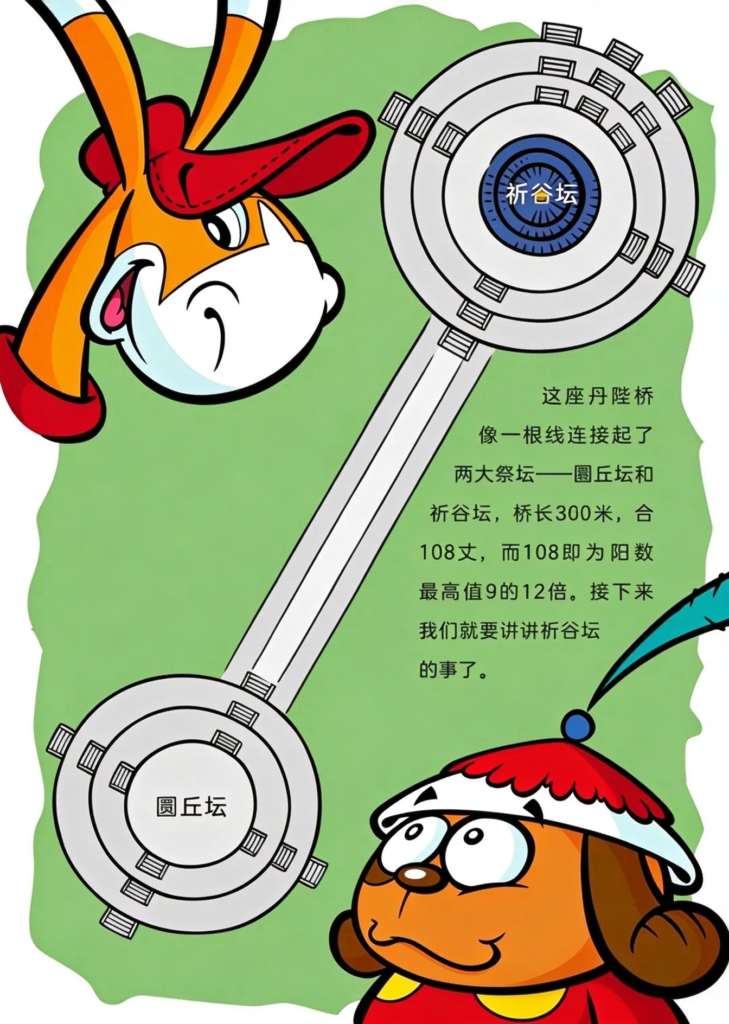
Its three tiered roof and three layered foundation correspond to the “Three Heavens” we covered earlier. The ritual date follows a tradition dating back to the Zhou Dynasty: the first Xin day of the first lunar month.

The Hall of Prayer for Good Harvests, together with its altar compound, went through major remodels over centuries.
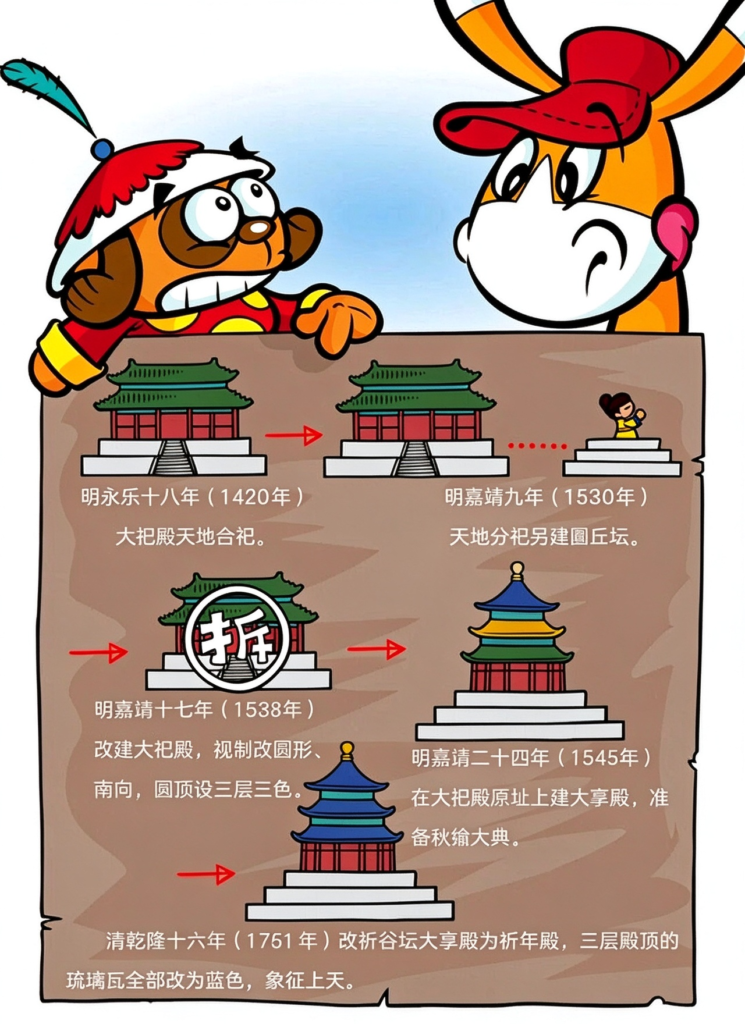
In the Jiajing era, it was known as the Hall of Grand Enjoyment. Its three roof tiers carried different colours: the upper blue for Heaven, the middle yellow for Earth, and the lower green for ancestral rulers, mountains, rivers and all living things.
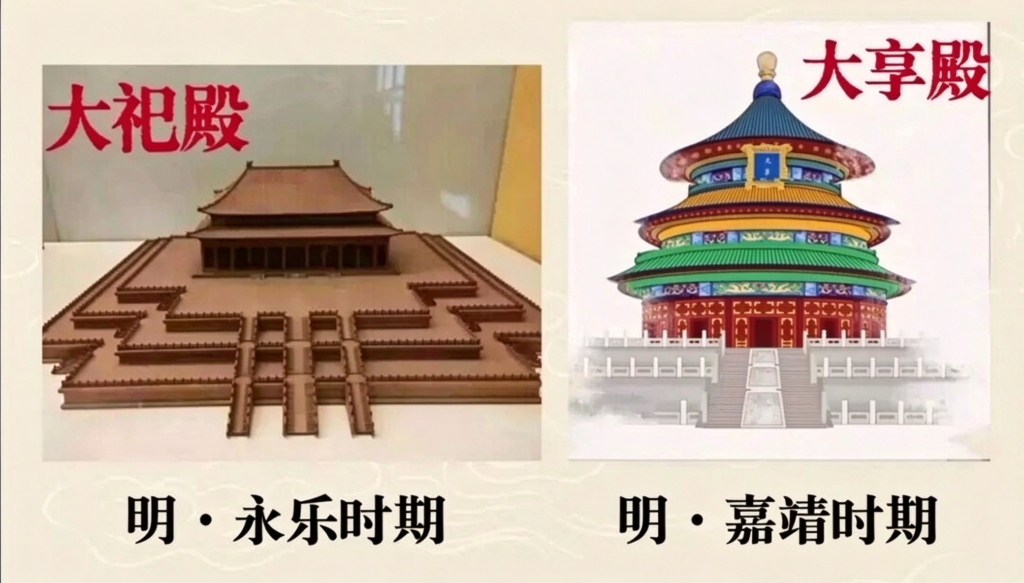
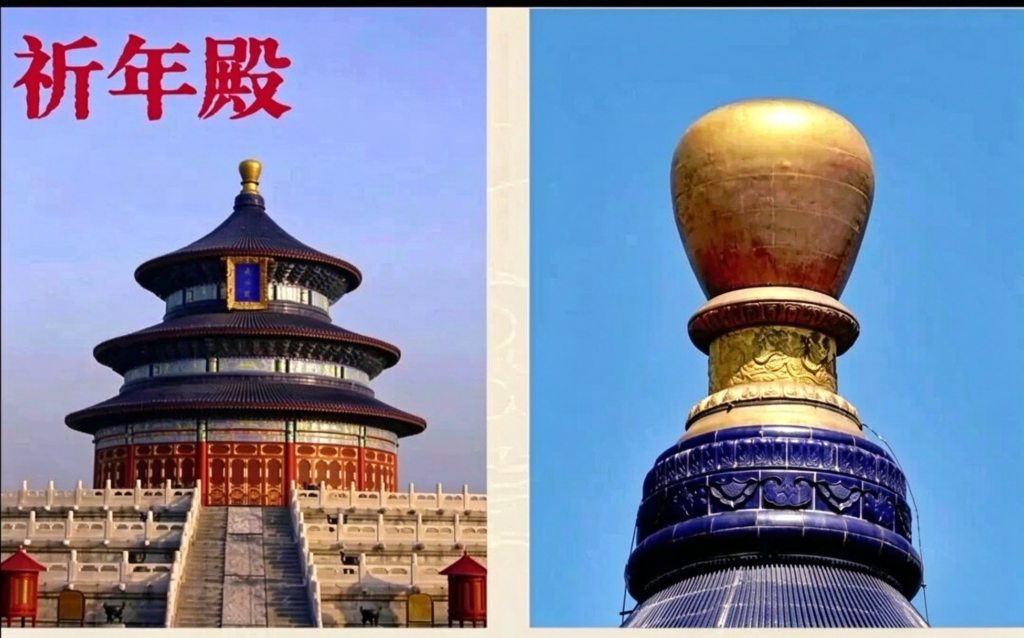
During the Qianlong reign, all three roof layers were repainted uniformly in blue.Vintage photographs taken by Felice Beato in 1860 and by Sanshichiro Yamamoto in 1900 preserve its appearance in different eras.
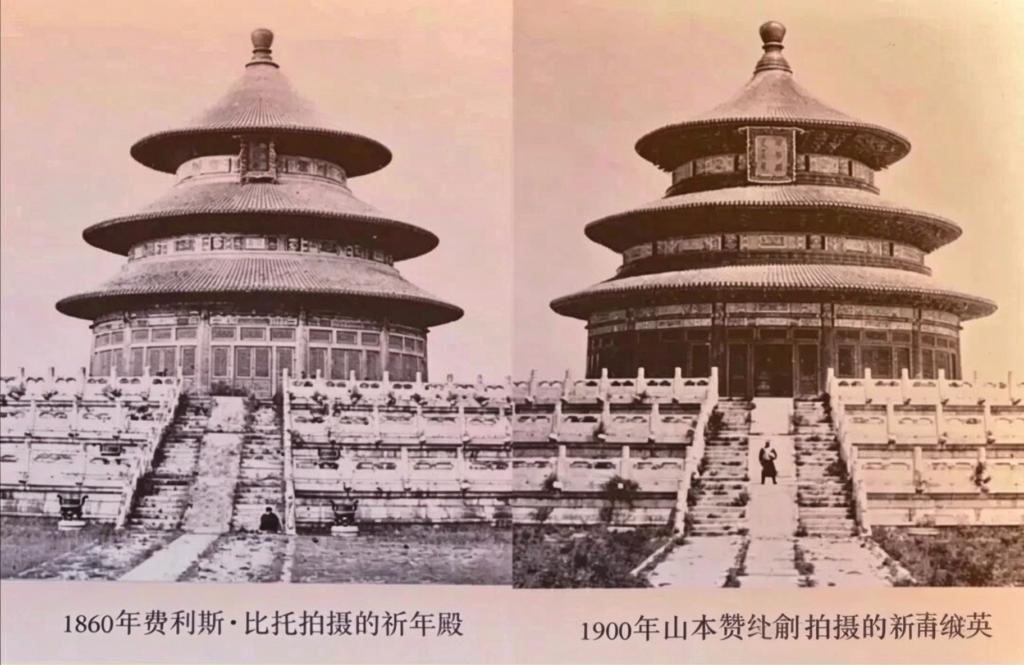
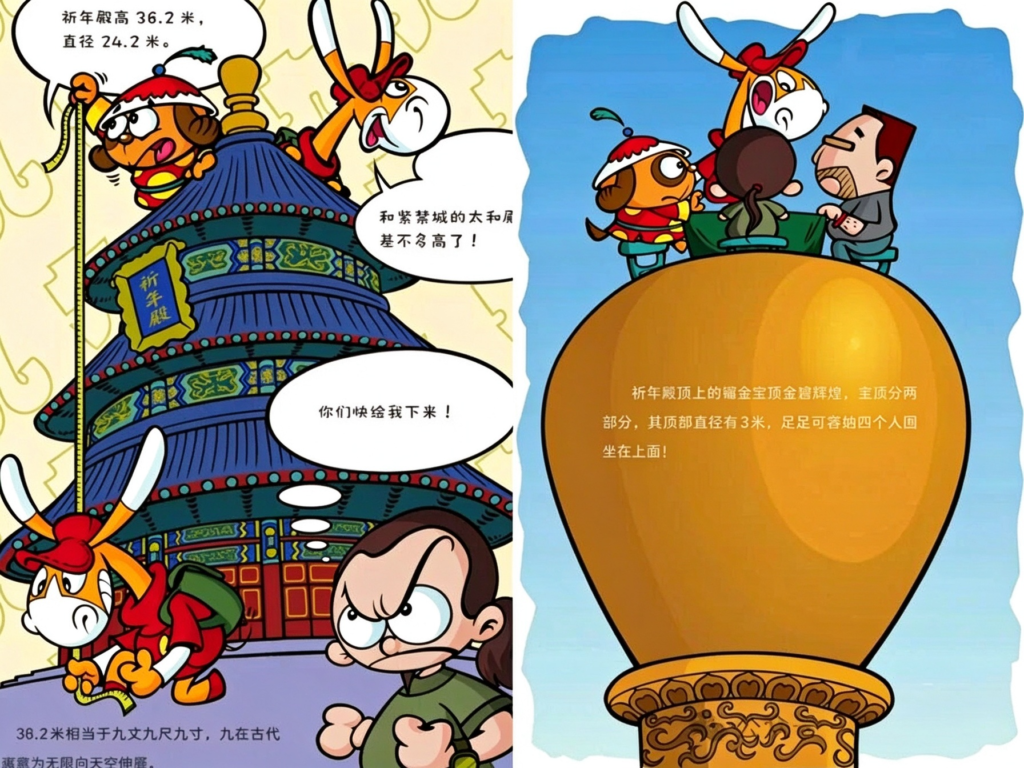
Tragically, the hall burned down in the 15th year of the Guangxu reign (1889). Before the fire, most beams and columns were made of golden nanmu. As it burned, the sweet fragrance of the timber drifted far across Beijing and could be smelled by residents from a distance. When rebuilt afterwards, golden nanmu was no longer used for all its pillars.
Astronomical Symbols Embodied in the Pillars
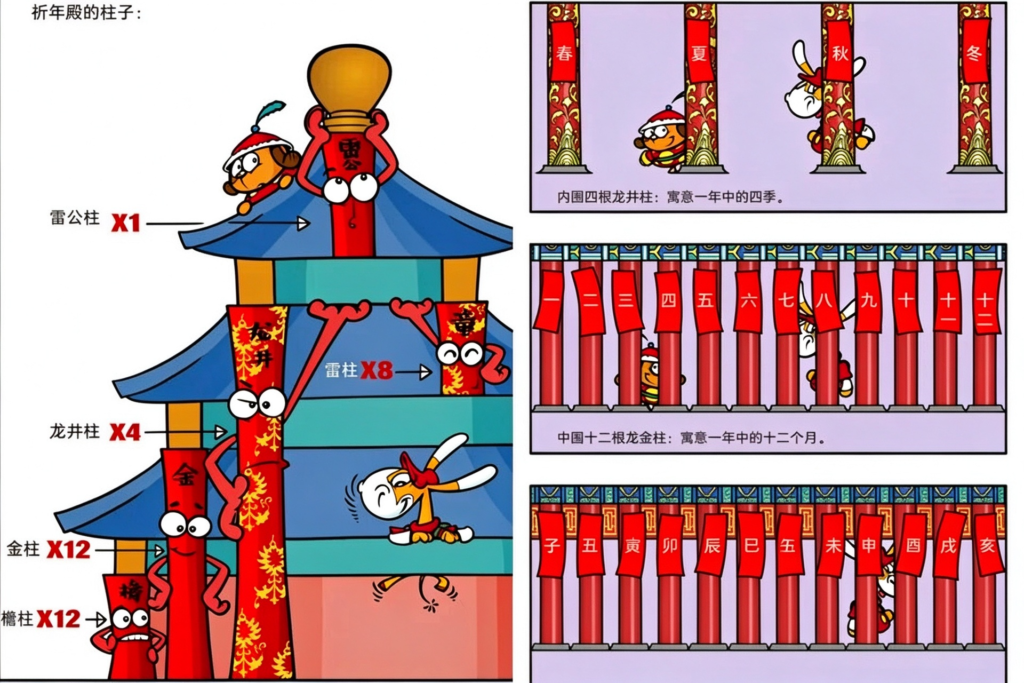
The number of pillars inside the hall carries a complete set of astronomical meanings:
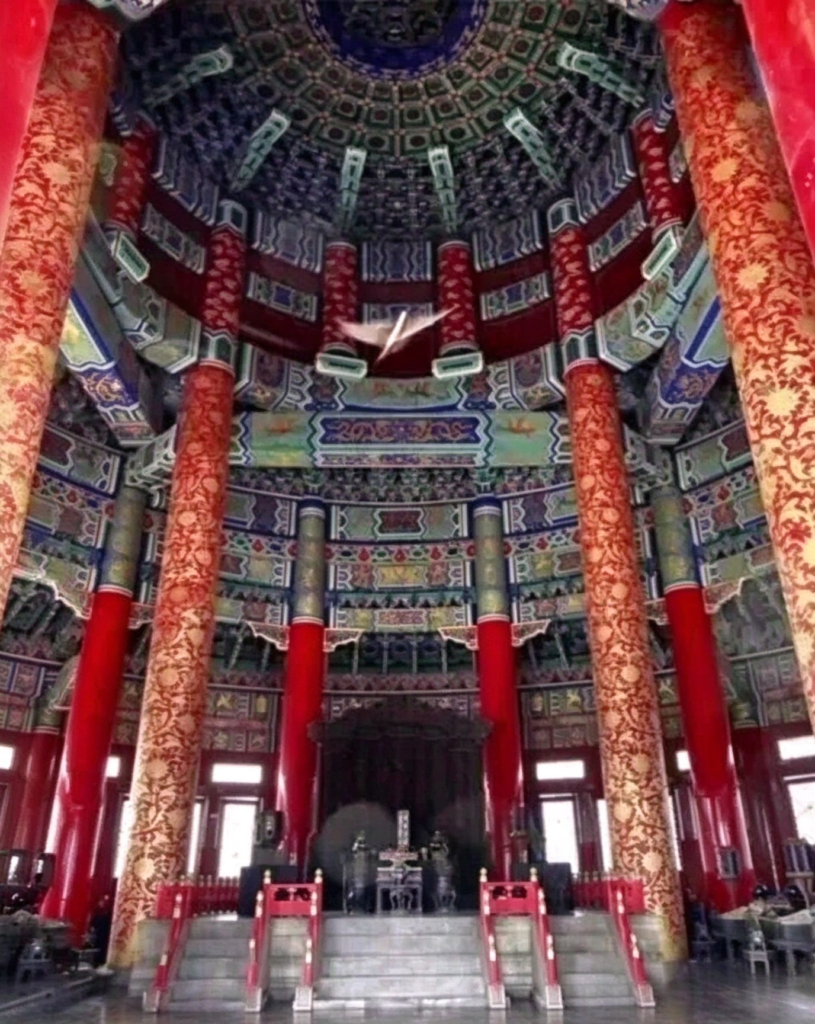
- Four central Dragon Well Pillars: symbolise the four seasons — spring, summer, autumn and winter;
- Twelve middle Golden Pillars: stand for the twelve months of the year;
- Twelve outermost Eaves Pillars: represent the twelve two hour periods of a day;
- The inner and outer rings combined make 24 pillars, symbolising the 24 Solar Terms;
- Adding the four Dragon Well Pillars to the 24 outer pillars gives a total of 28 pillars, representing the Twenty-Eight Constellations.
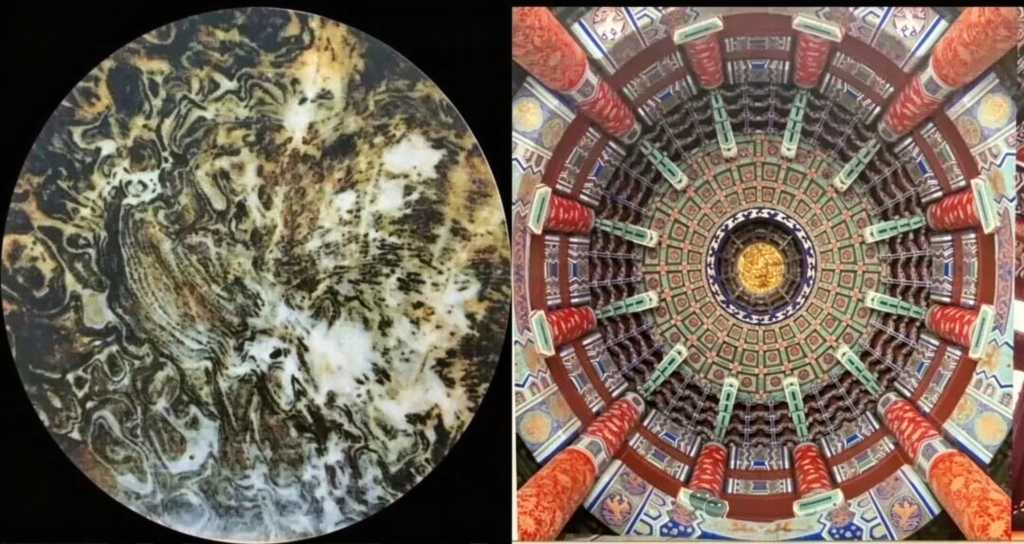
At the centre of the hall’s floor lies the Dragon Phoenix Stone, positioned directly below the Dragon Phoenix Caisson ceiling.
Remaining Auxiliary Buildings of the Prayer for Grain Altar
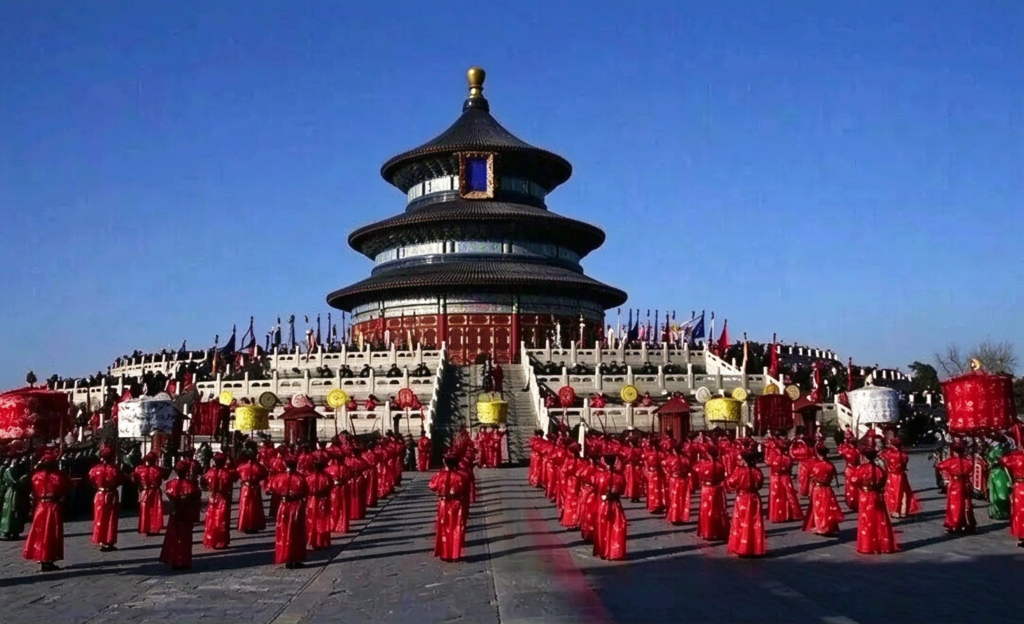
Around the Chinese New Year, staff at Beijing Temple of Heaven stage re-enactments of the ancient ritual, helping visitors understand this tradition.
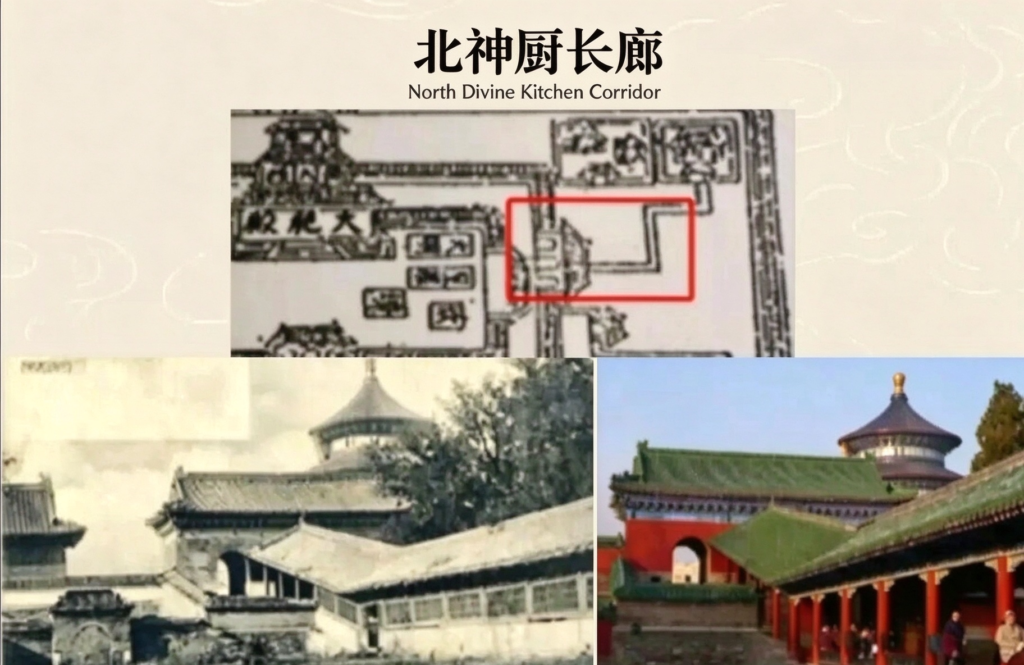
Besides this, the North Divine Kitchen and North Animal Slaughter Pavilion complex within the park reopened to visitors after a two year restoration.
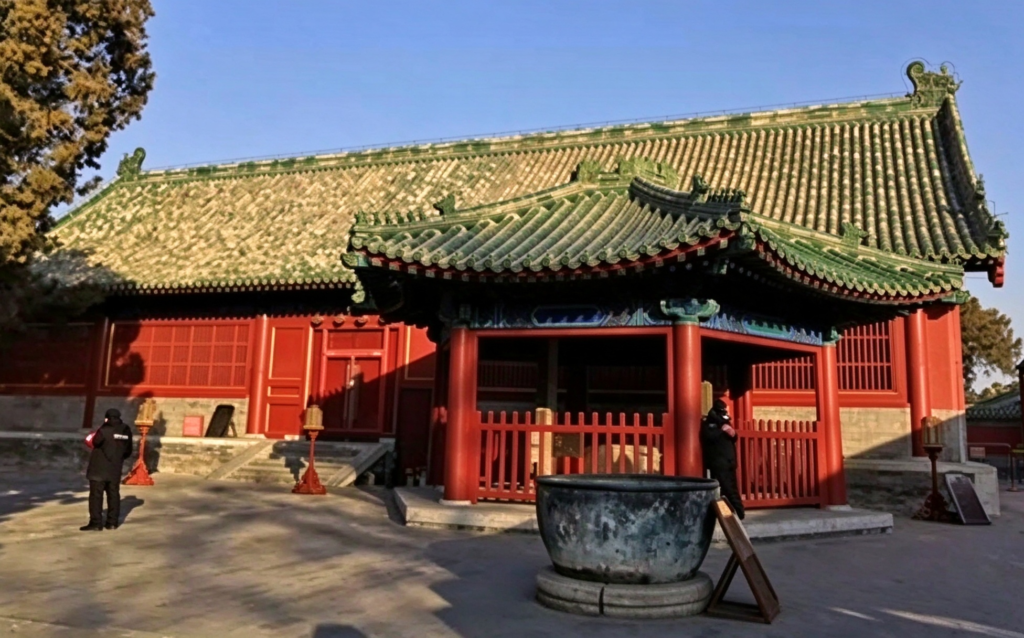
These auxiliary structures belonged to the Prayer for Grain Altar and were used to prepare ritual offerings. Though less grand than the main hall, they held great ritual importance. The emperor would inspect the offerings here before the ceremony as part of the formal procedure. An ancient well beside the buildings once supplied fresh, sweet water used to prepare sacrificial tributes. The covered corridor that once enclosed this area has since been fully demolished to create easier access for tourists.
Q:Why is the Temple of Heaven not located on Beijing’s central axis?
A: The Temple of Heaven was built in the southeast sector of Beijing during the Ming and Qing dynasties. Taking Zhengyangmen, China’s 0-kilometer benchmark point, as the reference, this spot marks the transition between the Si and Wu hours, when yang energy reaches its peak. It was a suburban sacrificial site laid out following ancient cosmological beliefs, rather than placed along the city’s main imperial central axis.
Q: What is the origin of the three-tiered platform of the Circular Mound Altar?
A: The three-tiered Circular Mound Altar traces its roots to a 5,500-year-old stone altar at the Niuheliang Hongshan Culture site. Ancient astronomers observed three circular paths traced by the sun at the solstices and equinoxes, calling this pattern the “Three Heavens”. This concept formed the foundation for the three-tier design of the heaven-worshipping altar.
Q: Was the Echo Wall deliberately engineered as an acoustic device?
A: No. Its sound-carrying effect is an unintended acoustic byproduct created by precisely fitted polished brickwork and the curved circular enclosure. Ming and Qing ritual documents never list sound transmission as a design objective. Modern guardrails and centuries of wall erosion have weakened this acoustic effect.
Q: What do the pillars inside the Hall of Prayer for Good Harvests symbolise?
A: The four central Dragon Well Pillars stand for the four seasons. The twelve middle Golden Pillars represent the twelve months of the year. The twelve outer Eaves Pillars symbolise the twelve two-hour periods of each day. These outer and middle pillars add up to 24, corresponding to the 24 Solar Terms. Together with the four Dragon Well Pillars, the total of 28 pillars represents the Twenty-Eight Constellations.
Q: What do “Yuan, Heng, Li, Zhen”, the names of the four gates of the Circular Mound Altar, mean?
A: The four Heavenly Gates of the Circular Mound Altar take their names from the Qian Hexagram in The Book of Changes. Yuan, Heng, Li, Zhen symbolise the cycle of four seasons and the continuous renewal of all living things. They embody the ancient philosophy of harmony between humanity and heaven, living in harmony with natural cycles.
Q: How many imperial spirit tablets were enshrined during Qing-dynasty rituals at the Temple of Heaven?
A: Only a small number of ancestral tablets were displayed in early periods. As the line of emperors grew longer, the Qing court set a fixed limit of eight emperors, ending with the Daoguang Emperor. Their tablets were placed in ritual tents on the Circular Mound Altar, paired with eight sacrificial burning furnaces.
Q: Is the surviving Hall of Prayer for Good Harvests the original Ming-dynasty building?
A: No. The hall was destroyed in a major fire in the 15th year of the Guangxu reign. Many original golden nanmu timber components were lost. The building we see today was reconstructed strictly following the original design after the fire.
Q: What are the functions of the two sacrificial systems at the Temple of Heaven?
A: The southern Circular Mound Altar hosted the grand Winter Solstice ceremony to worship the Supreme Deity of Heaven. The northern Altar of Prayer for Grain (Hall of Prayer for Good Harvests) held annual grain-praying rites on the first Xin day of the first lunar month, to pray for abundant harvests.
Q: What is the Dialogue Stone, and what acoustic effect does it produce?
A: The Dialogue Stone is the 18th slab at the southern end of the pathway of the Imperial Vault of Heaven. Standing on it, visitors can clearly hear voices from 36 meters away. The perceived loudness is roughly equivalent to a conversation at a distance of only 7 meters, a remarkable acoustic feature of this ancient complex.
VI. Conclusion & Visitor Tips
After reading through this guide, the full story of Beijing Temple of Heaven comes into clear view. Lying in the southeast sector of the walled city of Ming Qing Beijing and now within Beijing’s Dongcheng District, it was a ritual complex built for Ming and Qing emperors to worship Heaven and pray for grain harvests. It contains two sacrificial systems: the Circular Mound Altar for Heaven worship on the Winter Solstice, and the Prayer for Grain Altar for grain prayers in early spring. The Circular Mound Altar uses the number nine to symbolise Heaven, open to the sky and the celestial realm. The Imperial Vault of Heaven is famous for its Echo Wall acoustic phenomenon. The Hall of Prayer for Good Harvests uses its arrangement of pillars to represent the four seasons, twelve months and the Twenty-Eight Constellations. Every detail of its form is a physical expression of the ancient philosophy of harmony between heaven and humanity.
For visitors, there are three must see highlights: the Circular Mound Altar, the Imperial Vault of Heaven (Echo Wall), and the Hall of Prayer for Good Harvests. One note for your visit: the famous acoustic effects of some ancient structures have been weakened by modern conservation measures. Do not be disappointed if you cannot experience the legendary sound transmission. Beijing Temple of Heaven covers a vast area. Even during peak tourist seasons, you can still find quiet corners inside the park. Take your time to absorb the solemn, expansive atmosphere of this ancient altar for Heaven.